
Event Heater Types: Which One Suits Your Needs

In this article
- Event Heater Types in Kuwait
- Gas Heaters for Outdoor Events
- Electric Heaters for Events
- Pyramid Heaters for Outdoor Seating
- Tent Heaters for Events
- Best Heater for Gardens
- Suitable Heaters for Diwaniyas
- Choosing a Heater Based on Venue Size
- Heaters for Open and Enclosed Spaces
- Comparing Winter Event Heaters
Choosing a heater for an event does not begin with its appearance or with asking which type is the most powerful. It begins with understanding the environment where the heater will actually be used. The heating requirements of an open garden are different from those of a relatively enclosed tent, a diwaniya, or an outdoor reception area near the entrance to an event. The available options also vary according to ventilation, power source, guest distribution, seating layout, and the operating instructions of the heater itself. For this reason, event heater types cannot be ranked from best to worst in absolute terms. The correct approach is to match the available heater type to the actual environment and then distribute the heating appropriately and safely according to the manufacturer's instructions and site requirements instead of relying on a random number of units or choosing a heater based only on its appearance.
Event Heater Types in Kuwait
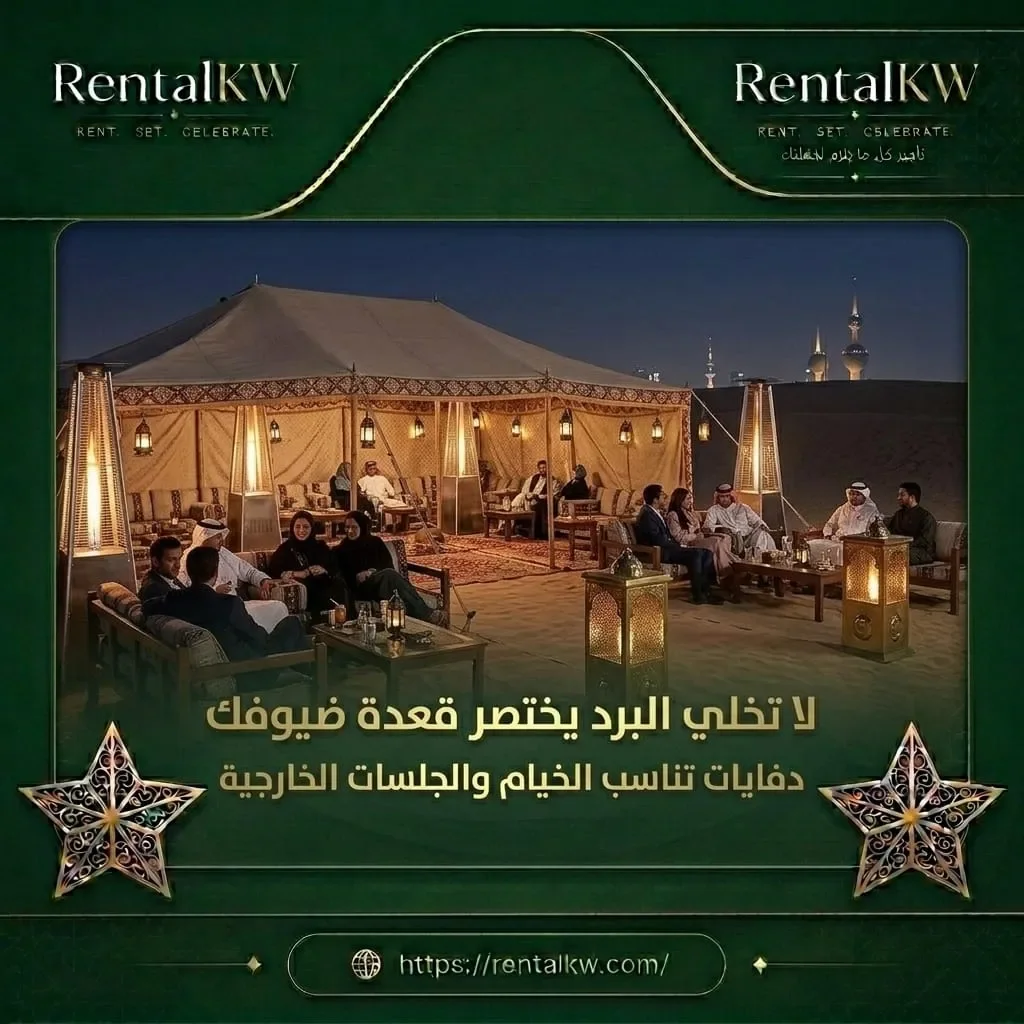
Event heater types in Kuwait vary according to their energy source, method of delivering heat, physical design, and the environment in which they are intended to operate. It is therefore better not to treat all heaters as devices that provide the same result as soon as they are switched on. A heater that suits an outdoor seating area may not be appropriate inside an enclosed space, while an electric heater requires the available electrical supply and load capacity to be assessed before it is added to the other event equipment.
The types that may be encountered when preparing events include electric heaters and heaters intended for outdoor seating areas, including pyramid-style designs and other forms depending on the equipment actually available. However, the appropriate fuel type and operating method should always be determined according to the specifications of the actual heater and the manufacturer's instructions rather than its general name or external appearance alone.
The way guests experience warmth is also important. In an open area, the objective is generally not to heat the entire volume of surrounding air in the same way as an enclosed room, but to improve comfort in the areas occupied by guests according to the way the heater operates. Seating distribution, wind exposure, and the size of the occupied area can therefore matter more than the total site area alone.
In Kuwait, the nature of the winter event itself also becomes part of the decision. An open residential garden, a majlis inside a tent, and an outdoor entrance reception area are not identical situations even when they accommodate a similar number of guests.
When comparing event heater types in Kuwait, it is preferable to:
• Begin by classifying the area as open semi-open or relatively enclosed before selecting a heater because the operating environment is the first factor that determines whether a particular device is suitable for the location at all
• Identify the available power source before choosing electric heaters and have the electrical loads and connections reviewed by a qualified person when necessary instead of adding heating equipment to the event setup without considering the electrical system
• Review the specifications and manufacturer's instructions for the actual model because heaters that appear similar may have different operating requirements and instructions for one unit should not automatically be applied to another
• Identify the areas where guests will actually sit or stand instead of distributing heaters according to the total site area because walkways and unused sections do not need to be treated in the same way as the main seating areas
• Avoid selecting a heater solely according to its visual appearance even when the equipment will be clearly visible within the event decor because suitability for the environment and operating requirements should come before aesthetics
• Ask about the heater options actually available when booking and compare each option according to the venue power source and seating arrangement instead of building the entire plan around a specific heater type that may not be available or appropriate
Gas Heaters for Outdoor Events
Gas heaters for outdoor events can be among the heating options considered for certain open areas when the selected unit is designed for that use and is operated according to the manufacturer's instructions and site requirements. However, selecting this type requires more care than simply knowing that it runs on gas because ventilation, placement, stability, model-specific clearances, and proper operating procedures are all essential considerations.
The most important point is not to transfer the concept of outdoor use into an enclosed environment simply because the weather is cold. A tent or surrounding barriers can significantly change ventilation conditions, so the site must be evaluated according to its actual configuration and the heater instructions regarding permitted operating environments must be followed. Combustion-based appliances should not be used where the manufacturer does not permit them or where ventilation conditions are unsuitable.
Within the outdoor event itself, guest distribution should also be considered. If several seating groups are separated from one another, placing heaters without connecting their positions to these occupied areas can produce uneven comfort. Movement routes should also remain clear so the equipment does not become an obstacle for guests or event staff.
A single universal safety distance should not be applied to all gas heaters because requirements vary by model. The correct reference is the instructions for the specific equipment and the responsible specialist when necessary.
When using gas heaters for outdoor events, it is preferable to:
• Confirm first that the selected heater is designed for the intended outdoor use and read its operating instructions instead of relying on its appearance or previous experience with a different model at another event
• Avoid using the heater in an enclosed or inadequately ventilated area when the manufacturer's instructions do not permit such use because the presence of a roof or surrounding sides can substantially change the operating environment
• Position heaters away from guest entrances exits and service routes according to the equipment requirements so they do not become obstacles in areas with frequent movement during the event
• Follow the clearances and placement requirements specified by the manufacturer for the particular model instead of applying one fixed distance to all heaters because designs and operating requirements can differ
• Avoid moving the heater or handling its fuel source in an improvised manner while it is operating and follow the operating instructions or consult the person responsible for the setup when repositioning or handling is required
• Distribute heaters according to the seating areas actually occupied by guests while considering site conditions and air movement instead of attempting to cover the entire outdoor area with a random number of units
Electric Heaters for Events
Electric heaters for events can be an option worth considering when the operating environment is appropriate and the venue has an electrical supply capable of supporting the required equipment safely. However, the apparent simplicity of plugging in an electric heater does not mean planning is always straightforward because events may simultaneously use lighting, hospitality equipment, sound systems, and other electrical devices that all depend on the same electrical infrastructure.
For this reason, the actual power requirements of each heater should be understood and the available electrical load should be reviewed by a qualified person when the nature of the setup requires it. Multiple heaters should not be connected through improvised arrangements, and the presence of unused electrical outlets does not by itself prove that the circuit can support the required load.
The operating location must also be considered. Not every electric heater is suitable for every outdoor environment or for exposure to moisture and weather conditions. If the event takes place in a garden or semi-open area, the actual model should be confirmed as suitable for that environment according to its specifications and manufacturer's instructions.
When used in a suitable location, the heaters can be distributed according to the occupied seating areas instead of being concentrated in a single point. The objective is balanced comfort while keeping cables and connections appropriately managed and away from movement routes.
When selecting electric heaters for events, it is preferable to:
• Understand the power requirements of each heater before deciding on the quantity because using multiple electric units must correspond with the electrical capacity available at the venue rather than only the number of seating areas
• Have electrical loads reviewed by a qualified professional when necessary especially when the event also includes lighting hospitality equipment and other high-consumption devices so the heating system is not planned separately from the rest of the electrical setup
• Avoid using unsuitable extensions or improvised connections simply to reach distant areas because the electrical route is part of the overall safety of the setup and should be appropriate for the load and location
• Confirm that the actual heater model is suitable for the environment in which it will be used and do not assume that an electric heater is automatically appropriate for gardens or areas exposed to outdoor conditions
• Plan heater locations and cable routes together before guests arrive so electrical cables do not end up crossing walkways or movement areas after tables chairs and other event furniture have already been arranged
• Compare electric heaters with other available options according to the power source venue type seating distribution and operating requirements instead of selecting them only because they do not require handling a fuel source at the event
Pyramid Heaters for Outdoor Seating
Pyramid heaters for outdoor seating often attract attention because of their distinctive appearance in gardens and reception areas, but their design alone is not enough to determine whether they are suitable for a particular event. A pyramid heater is still a device with specific operating requirements and an intended environment, so the specifications of the actual available model should be understood before deciding where it will be placed or how many units may be needed.
The usefulness of this type should be considered in relation to the areas where guests will actually spend their time. If seating is divided into several separate groups, the heating plan should assess each occupied zone rather than positioning the heaters around the edges of the venue simply to create visual symmetry. If guests are concentrated in one defined area, the distribution approach may be completely different.
Outdoor air movement is another important factor because heat in an open environment does not behave in the same way as it does inside an enclosed room. The total area alone cannot therefore predict the result, and it is not accurate to assume that one heater will cover the same fixed area at every venue and under all conditions.
Movement around the heater should also be considered. Aesthetic planning should never lead to placing a unit in a busy walkway or in a location that conflicts with the operating instructions and required clearances of the actual model.
When considering pyramid heaters for outdoor seating, it is preferable to:
• Treat the pyramid shape as part of the heater's design rather than independent evidence of heating power or coverage because actual performance depends on the model specifications and site conditions
• Distribute the heaters according to the seating groups actually occupied by guests rather than relying only on visual symmetry so heating positions correspond to the places where people spend their time
• Review the heater instructions regarding placement clearances and operating environment before incorporating it into the decor plan because safe operating requirements should come before the desire to position the unit in a visually attractive location
• Consider how exposed the site is and how air moves through it when evaluating performance and avoid using a fixed rule that assigns one pyramid heater to a specific number of square meters for every event
• Keep movement and service areas away from the heater according to its operating requirements so the equipment does not become an obstacle for guests or staff during hospitality service
• Confirm the actual available type and its energy source before booking because describing a heater as pyramid-shaped explains its general appearance but does not provide enough information to determine its operating requirements
Tent Heaters for Events
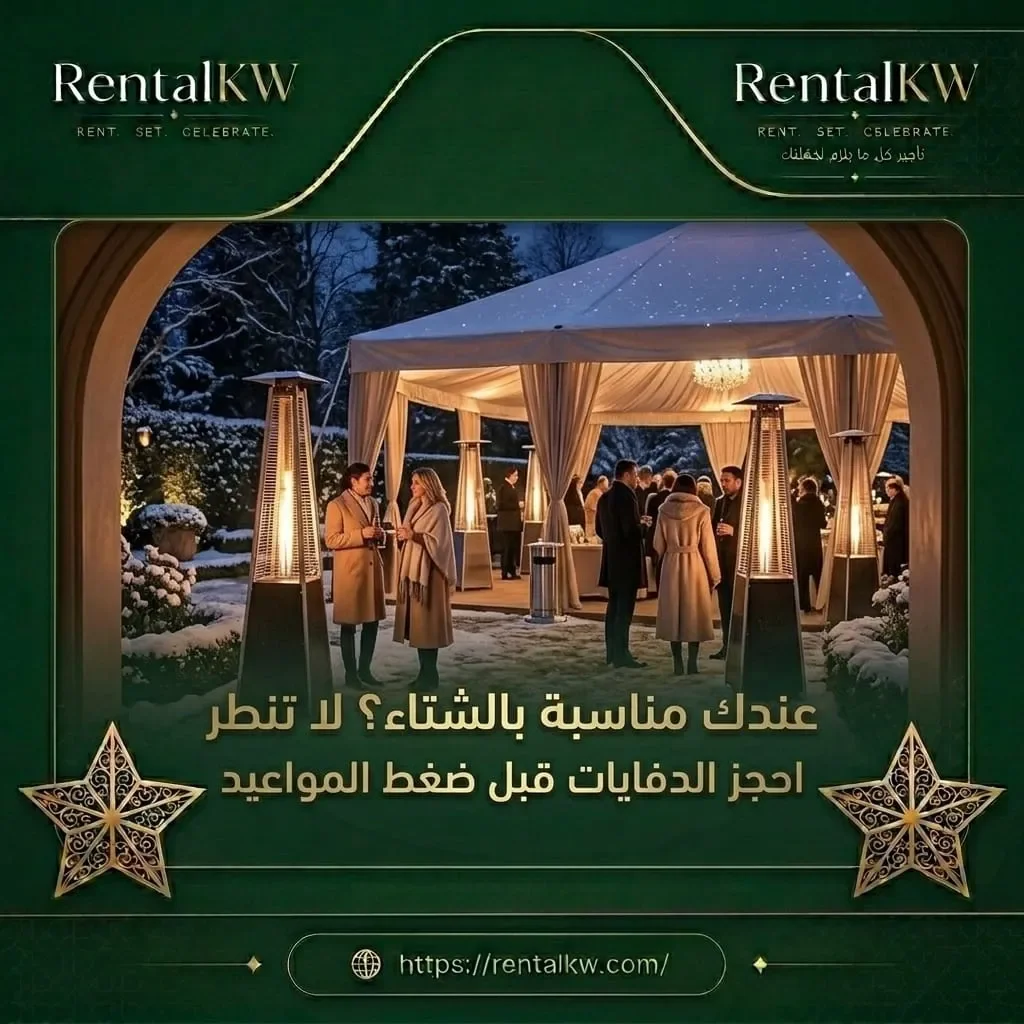
Choosing tent heaters for events requires additional care because the word tent does not describe one fixed operating environment. Tents can differ in size, height, degree of enclosure, number of entrances, guest movement, ventilation, and the type of equipment installed inside them. A heater therefore cannot be selected according to floor area alone.
The first question to resolve is which type of heating equipment is permitted inside the specific tent according to the heater specifications, tent requirements, and instructions of the party responsible for the setup. A heater commonly used outdoors should not automatically be considered suitable inside a tent even when some sides are open.
A tent used for an event with continuous movement through its entrances also behaves differently from a more enclosed tent with less traffic. Repeated entry of cold air can affect guest comfort and makes heating distribution part of the overall venue plan.
Heating should also be integrated with the rest of the tent setup. Tables, chairs, service aisles, lighting, and exits all affect the areas that can be allocated to heaters. Planning these positions early is better than attempting to add heating equipment after the furniture layout has already been completed.
When choosing tent heaters for events, it is preferable to:
• Determine how enclosed the tent is and understand its ventilation and active entrances before selecting a heater because simply describing the venue as a tent does not reveal the actual operating conditions inside it
• Confirm that the selected equipment is permitted for that environment according to the manufacturer's instructions and site requirements and never move a heater intended for different conditions into a tent without verification
• Include heater positions in the tent layout during the furniture planning stage so an important walkway or service area does not later have to be sacrificed to make room for equipment that was not considered from the beginning
• Pay attention to areas near entrances that experience greater air exchange and consider them within the comfort plan instead of assuming heat will be distributed equally throughout every part of the tent
• Have electrical loads reviewed by a qualified professional when electric heaters are selected especially when the tent simultaneously uses lighting hospitality equipment and other devices connected to the same electrical supply
• Avoid determining the number of heaters from tent area alone because height ventilation guest count openness seating distribution and the specific heater type all influence the actual requirement
Best Heater for Gardens
There is no single best heater for gardens because gardens can differ significantly from one property to another. A small garden surrounded by walls is not the same as a large exposed area, and one seating group close to the house is different from several seating zones distributed across the garden. Describing one heater type as universally best can therefore lead to a poor choice even when the equipment itself is high quality.
The first criterion is to determine which areas actually require thermal comfort. At many residential events, guests do not use the entire garden but instead gather around specific tables or seating groups. In this situation, focusing on those occupied areas is more practical than treating the complete garden as one uniform heating zone.
The power source comes next. If electric heaters are being considered, the electrical supply, load capacity, and connections must be appropriate. If the equipment uses a combustion fuel, it must be designed for the intended environment and operated according to the manufacturer's instructions and the site's ventilation and placement requirements.
Aesthetics should come later in the decision. Among technically suitable options, it is reasonable to choose equipment that complements the event design, but suitability should never be sacrificed simply for appearance.
When looking for the best heater for gardens, it is preferable to:
• Identify guest gathering areas on the garden layout instead of using the total garden size as the only basis for selection because large parts of the site may be occupied by pathways landscaping or areas that are not used for seating
• Consider how exposed each seating area is to open air because a location exposed from several directions can behave differently from a corner surrounded by features that reduce direct air movement
• Select the energy source after understanding the actual capabilities of the venue rather than relying only on personal preference because electricity and other energy sources each have requirements that must match the site and the heater
• Prioritize suitability for the environment and operating requirements first followed by the ability of the heater distribution to serve the seating areas and then the visual design that complements the event
• Avoid relying on a rule such as one heater for a fixed area of garden because outdoor heating performance is affected by factors that cannot be represented by floor area alone
• Compare the options actually available for the event instead of searching for a theoretically perfect heater because the best choice is the equipment whose specifications match the site seating arrangement and operating requirements
Suitable Heaters for Diwaniyas
Choosing suitable heaters for diwaniyas is different from heating an open garden because a diwaniya may be enclosed or semi-enclosed and may already contain electrical equipment, furniture, and defined circulation routes. The selection should therefore begin with the actual nature of the diwaniya rather than with a heater type that worked well at a previous outdoor event.
If the diwaniya is enclosed, any heater used inside it must be suitable for that environment according to the manufacturer's instructions. Equipment designed for outdoor use should not be moved indoors simply because stronger heating is desired. Electric heaters that are suitable for the location still require consideration of their electrical requirements, particularly when other devices are operating at the same time.
The seating arrangement within the diwaniya also matters. Guests may remain seated along the sides of the room for extended periods, so the goal should be overall comfort rather than placing a heater in one location simply because it is close to an electrical outlet.
Connections should also not become an obstacle within the majlis. Planning the heater position and power supply before the event helps keep movement routes organized according to appropriate setup requirements.
When choosing suitable heaters for diwaniyas, it is preferable to:
• Determine whether the diwaniya is enclosed or semi-open and understand its ventilation before selecting the equipment because the type of environment determines what can be used according to the manufacturer's instructions
• Avoid bringing outdoor-only equipment into a diwaniya simply because it is available or appears powerful because suitability for the environment is more important than the perceived heating strength
• Review the electrical load when using electric heaters alongside existing equipment and do not consider the presence of an available electrical outlet sufficient evidence that the circuit can safely support the heater
• Select heater positions after understanding the actual seating distribution so comfort is not concentrated on one side while regularly occupied seating areas remain outside the useful heating zone
• Organize cable routes according to the requirements of the venue and keep them away from guest movement instead of adding heaters after the majlis is complete and then searching for the nearest power source
• Consider the duration and style of use because a diwaniya where guests remain seated for hours requires more consistent comfort planning than a short reception or transitional area
Choosing a Heater Based on Venue Size
Choosing a heater based on venue size may appear to be a simple mathematical calculation, but floor area alone is not enough to determine the appropriate heater type or quantity. An open and exposed area behaves differently from an identical-sized area inside a tent, while ceiling height, ventilation, number of entrances, guest density, and seating distribution can all influence the heating requirement.
It is therefore important to distinguish between total area and occupied area. An event may take place at a large venue while guests use only a limited portion of it. In that situation, treating the entire site as if it requires the same level of heating is not practical.
The actual heater type and capacity are also essential factors. It is not accurate to say that every heater serves a fixed number of square meters without knowing its specifications and the operating conditions defined by the manufacturer. Even heaters with similar appearances can differ in performance and in the way they deliver heat.
For larger setups, an actual assessment of the venue and electrical loads when relevant is preferable to relying on a generic formula. The objective is not to achieve the highest possible number of heaters but to distribute suitable equipment effectively across the areas that are actually used.
When choosing a heater based on venue size, it is preferable to:
• Calculate the seating and reception areas requiring heating separately from the total venue area so walkways and unused sections are not included in the requirement in the same way as occupied spaces
• Record whether each area is open enclosed elevated ventilated or exposed to frequent entry and exit because spaces with identical floor areas can require completely different solutions
• Refer to the specifications of the actual heater to understand how it should be used and avoid applying the performance of a previously used heater to another unit simply because the type or appearance is similar
• Consider guest numbers and how they are distributed because a concentrated group in one area differs from guests spread across multiple seating zones within the same venue
• Have the power supply and electrical loads reviewed by a qualified person when the plan relies on multiple electric heaters because increasing the quantity must remain compatible with the available electrical infrastructure
• Use venue size as a starting point for assessment rather than a final formula for determining quantity because the correct decision combines space ventilation seating heater specifications and actual event conditions
Heaters for Open and Enclosed Spaces

The difference between heaters for open and enclosed spaces is not simply a difference in heating power. It also involves the operating environment for which the equipment was designed. This distinction is particularly important at events because choosing a heater that is unsuitable for the location can create a problem much more serious than inadequate warmth.
In an open area, air is constantly moving, so the focus is generally on the zones occupied by guests according to the characteristics of the heating equipment being used. In an enclosed area, conditions are fundamentally different in terms of heat retention, ventilation, and equipment operating requirements.
This does not mean that every electric heater is automatically suitable for every enclosed environment or that every outdoor heater can be used under any type of covering. The correct reference remains the equipment specifications, manufacturer's instructions, and actual conditions of the venue.
There are also semi-open areas that cannot be classified accurately by name alone, including certain tents, covered terraces, or seating areas surrounded by partial walls. These situations should be assessed according to their real conditions rather than being simplified into either outdoor or indoor categories.
When comparing heaters for open and enclosed spaces, it is preferable to:
• Classify the venue according to its actual level of enclosure and ventilation rather than its name alone because a tent or covered terrace can differ substantially from a completely exposed outdoor area
• Use equipment only in environments permitted by the manufacturer's instructions and do not move a heater between indoor and outdoor settings simply because both locations feel equally cold or require heating
• Approach open areas through the seating zones actually occupied by guests instead of attempting to heat the complete surrounding air in the same way as an enclosed room because heat loss behaves differently outdoors
• Recognize that an enclosed venue requires equipment suitable for that environment rather than simply a heater with greater output because operating conditions ventilation and safety requirements come before the desired heating level
• Evaluate semi-open areas independently and avoid automatically placing them in either the outdoor or indoor category when their roof sides and ventilation create different conditions
• Select from the available equipment only after reviewing the actual operating instructions rather than relying on broad labels such as outdoor heater or indoor heater without checking the specifications of the specific model
Comparing Winter Event Heaters
Comparing winter event heaters requires clear criteria because the question of which heater is best does not have one answer that works for every occasion. A useful comparison begins with the operating environment, followed by the energy source, guest distribution, and equipment requirements. Only after those factors are understood should appearance and ease of integration into the event design be considered.
A heater that performs effectively in an open garden may not be permitted or suitable inside an enclosed diwaniya, while an electric option that works well in one area may require the electrical load to be reviewed before multiple units are used. Heaters with distinctive outdoor designs, including some pyramid models, should also be assessed according to their actual specifications rather than their appearance alone.
Another common mistake is comparing equipment according to quantity. Three units of one type are not necessarily better or worse than a different number of another type because their operating method, capacity, and site conditions can differ significantly.
Price should not be the only basis of comparison either. The suitable option is one that can be operated correctly in the intended environment and can serve the required seating areas without creating problems related to power, movement, or ventilation.
When comparing winter event heaters, it is preferable to:
• Place equipment suitability for the venue at the beginning of the comparison and eliminate any option whose specifications do not permit the required operating environment before moving on to price appearance or other considerations
• Compare the power and operating requirements of the available options and determine what the venue can realistically provide so equipment that appears suitable in theory is not selected when the existing infrastructure cannot support it properly
• Evaluate heat distribution in relation to guest locations rather than comparing the number of units alone because the objective is to improve comfort in occupied areas rather than simply achieve a larger heater count
• Consider how easily the equipment can be integrated into the venue layout only after confirming its operating suitability so its position does not conflict with walkways hospitality service or the arrangement of tables and seating
• Review the instructions for the specific model when comparing two apparently similar options because operational differences can be more important than similarities in appearance or general product category
• Make the final decision by balancing venue suitability energy requirements usage pattern and distribution rather than assuming that one heater type must be the best choice for every winter event
Conclusion
Choosing the right event heater types is not about finding the most powerful device or the most attractive design. It begins with understanding the venue. A garden, tent, diwaniya, and semi-open area each present different conditions related to air movement, ventilation, energy source, and guest distribution, so an option that works well at one event may be completely unsuitable at another.
A useful comparison starts by identifying the areas where thermal comfort is actually needed, then reviewing the heater types that are genuinely available and checking the specifications and operating instructions of each model. The required quantity, distribution, energy source, and electrical loads where relevant can then be considered. This prevents the heating plan from becoming a simple exercise in adding more equipment without a clear strategy.
If the venue includes several different environments, such as a tent, garden seating, and an outdoor reception area, each section should be evaluated independently. The best service is not the one that places the same heater everywhere, but the one that matches each part of the event with equipment suitable for its real operating conditions and safe-use requirements.
Frequently Asked Questions
Is there one heater type that is best for every event?
No. Heater suitability changes according to the venue, level of enclosure, ventilation, available energy source, guest seating arrangement, and the specifications of the equipment itself. The type should therefore be selected after understanding the actual event conditions.
Can an outdoor heater be used inside a tent?
This should never be assumed. The manufacturer's instructions for the specific heater, the tent requirements, and the site conditions must be reviewed because some equipment is designed only for particular operating environments and does not become suitable simply because the tent has openings.
Are electric heaters suitable for large events?
They can be suitable at some venues when the equipment is appropriate for the environment and the electrical infrastructure can support the required number alongside other event equipment. Electrical loads should be reviewed by a qualified person when the scale or complexity of the setup requires it.
Does a pyramid heater's shape mean it provides stronger heating?
Not necessarily. The physical shape alone does not determine heating capacity or suitable coverage. The specifications of the actual model, its operating method, and the environment for which it was designed should be reviewed.
How do I know how many heaters an event needs?
The quantity cannot be determined from floor area alone. It is influenced by seating zones, height, openness, ventilation, air movement, guest numbers, heater type, and equipment capacity. Larger events therefore require a more detailed assessment rather than a fixed numerical rule.
What should be prepared before event heaters arrive?
The seating arrangement, walkways, and service areas should ideally be clear, suitable power sources should be identified, and preliminary heater positions should be planned according to the operating instructions so suitable locations do not have to be found after the event setup is already complete.
Is the most expensive heater always the best for an event?
No. Real value depends on whether the heater suits the venue and operating conditions rather than its price alone. A less expensive unit can be more appropriate for a particular location when its specifications better match the actual requirements.
What is the biggest mistake when choosing winter event heaters?
One of the biggest mistakes is selecting the heater type and quantity before understanding the venue and then attempting to distribute the equipment after the rest of the setup has been completed. This can lead to unsuitable choices involving ventilation, electrical capacity, or guest movement that could have been avoided through earlier planning.