
Multi-Day Decorative Lighting Rental Costs in Kuwait

In this article
- Multi-Day Decorative Lighting Rental
- Decorative Light Rental Prices by Duration
- String Light Rental for Three Days
- Weekly Net Light Rental
- LED Lighting Costs by Rental Duration
- Lighting Installation Costs for Extended Events
- Decorative Light Rental Extension Costs
- Lighting Prices Based on the Number of Points
- Multi-Day Decorative Lighting Packages
- How to Calculate Event Lighting Costs
- Conclusion
- Frequently Asked Questions
When preparing an event that lasts more than one day in Kuwait, lighting costs depend on the rental duration and pricing method rather than the number of decorative lights alone. You may need string lights for three days, net lights for an entire week, or LED decorations that remain installed throughout the celebration. This makes it important to understand the difference between daily rental rates, multi-day packages, installation charges, and extension fees. Some expenses are paid only once, while others change as the rental period increases. This guide explains multi-day decorative lighting rental, how to calculate costs, compare quotations, and avoid unexpected charges so you can choose lighting arrangements that fit your budget without paying extra for services you do not need.
Multi-Day Decorative Lighting Rental
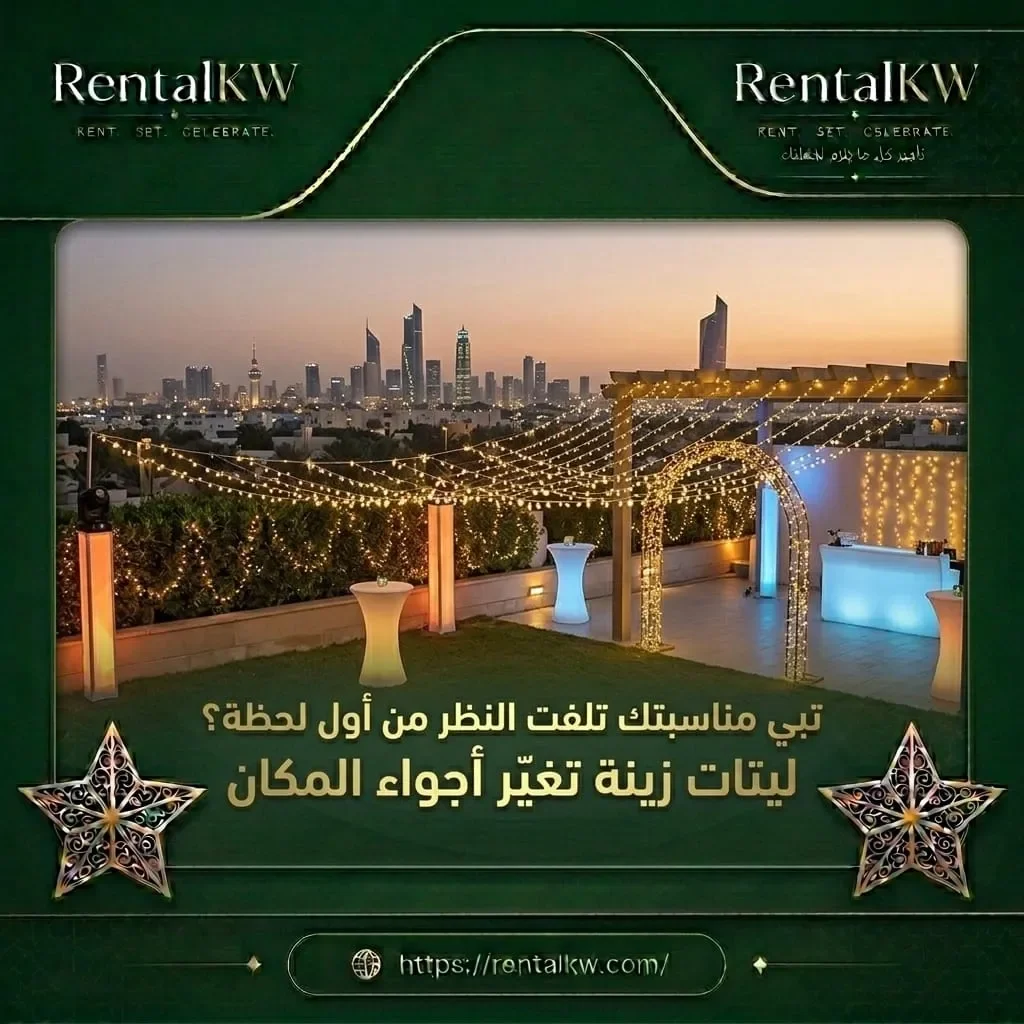
Multi-day decorative lighting rental differs from booking lighting for a single-night occasion because the length of time equipment remains at the venue becomes an essential part of the agreement. Decorative lighting may be required for a wedding lasting two days, a family celebration extending over several evenings, or a commercial event that needs fixed decorative lighting throughout its visitor reception period. In these situations, asking only about the daily rental price of decorative lights is insufficient without understanding how additional days are calculated.
An accurate comparison begins by identifying the period during which the lighting will actually remain installed. There is a difference between operating decorative lights for three consecutive evenings and installing them one day before the event and removing them another day after it ends. A rental company may calculate the duration according to the number of days equipment remains in the customer's possession, the nights of operation, or a specified contractual period. Delivery, installation, and dismantling dates must therefore be clarified before agreeing on the price.
Financially, multi-day lighting rental costs generally consist of several components. There may be charges for preparing the venue, installing decorative strings and electrical connections, using the equipment during the agreed period, and dismantling and transportation. Keeping the equipment for several days does not necessarily mean that all these expenses will be repeated daily.
For example, if someone needs decorative lighting on the exterior of a house for four days, leaving the installation in place throughout that period may be more practical than dismantling and reinstalling it every evening. However, this depends on the property owner's approval, the ability to protect equipment from interference and weather conditions, and electrical safety requirements.
The type of lighting also influences pricing. Lightweight LED strings differ from large lighting nets or installations requiring special supporting structures. As installation, protection, and monitoring requirements increase, comparing prices based only on the number of rental days becomes less accurate.
A common mistake is assuming that a long-term rental discount is guaranteed with every supplier. Some companies may offer a lower rate for additional days because the equipment is already installed, while others apply a fixed rate or a specific package. A written quotation covering the entire rental period should therefore be requested rather than relying on general assumptions.
Lighting that remains at a venue for several days also requires consideration of operating conditions. If it is installed in a garden or outdoor courtyard, equipment and connections must be suitable for the surrounding environment, with power sources protected and cables organized according to technical requirements. Responsibility for switching the lighting on and off during the rental period should also be established.
The advantage of multi-day rental becomes clear when it provides a consistent installation without requiring customers to purchase equipment and store it after the event. Its value increases when the package is transparent, reflects the actual period of use, and avoids repeated unnecessary charges.
When renting decorative lighting for several days, consider the following:
-
Define the exact beginning and end of the rental period: Ask whether the company calculates the duration from equipment delivery or the first evening of operation or the installation date because differences in calculation methods can change the final cost even when the number of event nights is identical
-
Separate equipment rental charges from on-site service fees: Establish the cost of using the decorative lights themselves and the charges for installation dismantling and transportation because some of these services are performed only once and should not automatically be assumed to recur with every additional day
-
Review whether lighting can remain installed throughout the event: If the occasion continues for several evenings at the same location discuss the possibility of keeping the equipment installed instead of removing it daily while confirming venue management approval and suitable protection and safety conditions
-
Choose lighting equipment suitable for extended operation: Decorative strings lighting nets and larger installations may differ in their ability to withstand venue conditions and operating hours so equipment ratings and instructions should be reviewed before renting them for an extended period
-
Do not assume a fixed discount applies when more days are added: Request a total quotation for the required duration and compare it with the single-day rate because suppliers may use packages tiered prices or additional charges depending on equipment type and availability
-
Define responsibility for monitoring lighting during the rental period: Establish who will operate and switch off the lighting report malfunctions and handle damaged cables or units so additional rental days do not lead to disagreements about responsibility or repair expenses
Decorative Light Rental Prices by Duration
Decorative light rental prices by duration vary because pricing does not always involve multiplying the single-day rate by the number of days. Some rental companies separate order preparation costs from the charges for retaining equipment, while others offer combined rates for occasions extending over several evenings. The daily price displayed in an advertisement may therefore be insufficient for estimating the actual budget.
Understanding the difference requires distinguishing fixed expenses from duration-related expenses. Sending an installation team and preparing mounting points may cost approximately the same whether an occasion lasts one day or three days, provided the design and equipment location remain unchanged. However, the charge for reserving decorative lights and preventing them from being used for other bookings may increase as the rental period becomes longer.
The concept can be illustrated with a hypothetical calculation that does not represent actual market prices in Kuwait. If preparing a set of decorative lights involves installation and transportation charges of KWD 30 and equipment rental costs KWD 12 per day, the calculated cost for one day would be KWD 42, while three days would cost KWD 66 before any other services. In this example, the total cost does not triple because preparation charges are counted only once.
However, some suppliers may offer a three-day package at a different price. This could result from discounts on additional days, monitoring fees, or calculating a longer period of equipment possession. The example should therefore be treated as a way to understand pricing components rather than a reference for actual rental rates.
It is also important to compare quotations using the same rental period. One supplier may advertise a price per evening of operation, while another calculates the price based on 24 hours from collection or delivery. If an event starts on Thursday evening and ends on Saturday evening, the number of chargeable periods may differ according to the terms of each quotation.
Peak days and seasonal demand may also influence prices and availability among certain suppliers. Equipment may be needed for several events scheduled close together, affecting the ability to allocate it to a longer booking. However, no specific seasonal increase or standard discount percentage can be assumed without reviewing current company quotations at the time of booking.
Comparison becomes even more important when a service includes installation at multiple venues or moving equipment during the rental period. A continuous booking at one location involves different on-site work from using the same decorative lights at two locations over three days, even if the equipment quantity remains unchanged.
The better question is therefore not simply how much decorative lights cost per day, but what the total cost will be for the required duration and which charges change when one day is added to or removed from the booking.
When comparing decorative light rental prices by duration, use the following criteria:
-
Request a separate quotation for every duration you are considering: Compare the cost of one day two days three days or a full week according to your actual needs so you can understand the increase between options instead of relying on a daily rate that may not reflect the final pricing method
-
Understand the fixed portion of the cost before calculating additional days: Fixed expenses may include transportation preparing mounting points installation and dismantling so distributing them across several days changes the average daily cost even when the daily equipment rental rate remains unchanged
-
Compare quotations using a consistent time period: Delivery installation operation and collection times should be defined in every quotation because a price calculated per evening may not be directly comparable with an offer based on complete days of equipment possession
-
Ask how extended-rental discounts are calculated: A supplier may offer tiered pricing a combined package or reduced rates for additional days but the discount amount and conditions must be confirmed in writing rather than assuming each new day will cost less than the previous one
-
Separate the cost of moving decorative lights between venues from the rental duration: If you intend to use lighting at more than one location during the booking request separate pricing for transportation and reinstallation because moving equipment can introduce work that is not required for continuous rental at a single venue
-
Review the total amount rather than the average daily rate alone: One quotation may appear cheaper per day but include additional charges for connections dismantling or monitoring so the final amount and included services should be compared before choosing a company
String Light Rental for Three Days
Booking string lights for three days is suitable for occasions involving activities spread across several consecutive evenings, such as welcoming guests before a wedding, an extended family celebration, or a small event running through a weekend. Decorative string lights can be arranged along building exteriors, above seating areas, or around architectural features according to product specifications and installation requirements.
However, the success of this arrangement depends on planning how the strings will be distributed before deciding how many meters are required. Lighting a straight building frontage differs from creating intersecting lines above a seating courtyard or arranging strings around several columns. The quantity of lighting may change considerably depending on the installation route rather than the venue's floor area alone.
When booking for three days, the lighting appearance should be considered for all three evenings. The first occasion may be a quiet reception requiring simple decorative lighting, while the main celebration may need a more prominent arrangement. If the design will change between evenings, modification and technical labor costs should be included in the agreement rather than assuming they are covered by the basic rental.
Lighting color and brightness are also important. Warm lighting may suit certain home seating areas and family gatherings, while other events may require a different color or a consistent visual pattern. String lights should be compatible with one another so unintended differences in color or brightness do not appear between sections of the design.
Suspended strings require appropriate mounting points capable of supporting their weight and the loads affecting them. They should not be attached to weak decorative elements or stretched across circulation routes in ways that could cause guests to trip or expose cables to tension. Equipment suitable for outdoor use must also be selected when strings are exposed to weather conditions.
The cost of renting string lights for three days may vary according to their length, type, number of lighting runs, and installation method. Attaching strings to an easily accessible building exterior is not necessarily equivalent in cost to installing them at greater heights or above an area requiring special access equipment.
Operating hours should also be defined for all three evenings. Lighting may not need to remain switched on throughout the day when the occasion takes place only in the evening. Operation should be handled by a designated responsible person according to equipment instructions and venue requirements.
The practical benefit of a continuous booking is maintaining a consistent design over three days while reducing dismantling and reinstallation work whenever venue conditions allow.
When booking string lights for three days, review the following:
-
Determine the string routes before requesting quantities: Draw an approximate layout of the building exterior seating area or columns where lighting will be suspended because the required number of meters depends on route lengths and arrangement patterns rather than the venue area alone
-
Decide whether the design will remain unchanged throughout the three evenings: If you need to alter the distribution of strings between nights agree on the modification work its schedule and cost instead of assuming continuous rental automatically includes redesigning the lighting
-
Choose lighting color and brightness consistently: Review the specifications of strings used in different venue sections so unwanted differences between warm and white lighting or brightness levels do not appear within the same design
-
Confirm the suitability of mounting points and installation heights: Appropriate fixing methods must be used without placing loads on decorative elements or weak surfaces not designed to support them while maintaining safe circulation routes for guests and staff
-
Request pricing that identifies string lengths and installation work: Strings installed on a low building frontage may cost differently from those requiring elevated suspension or special access equipment so work details should be established before comparing quotations
-
Organize operating hours over the three days: Define when the strings will be switched on and off and who is responsible so the decorations follow the event schedule without unnecessary operation or intervention by unqualified individuals in electrical connections
Weekly Net Light Rental
Weekly net light rental differs from traditional string lighting in its distribution and coverage method. Net lights generally consist of interconnected illuminated strands arranged in a mesh pattern that can decorate building exteriors, fences, backgrounds, and selected photography areas. This type of lighting is particularly useful when a fixed design needs to remain in place for an entire week without changing its appearance every evening.
Cost estimation begins by measuring the area requiring coverage rather than simply counting the number of net light panels. Lighting nets differ in length, width, bulb density, and spacing between lights. Two panels with the same dimensions may therefore create different appearances if their light distribution differs. The supplier should specify the actual dimensions of each net before quantities are calculated.
Large building exteriors also require consideration of how multiple nets will be joined. Unwanted gaps may appear between panels if their dimensions are incompatible or mounting points are unsuitable. Using nets with different light colors or brightness levels can also create noticeable variations in the final appearance, particularly when the building exterior is photographed from a distance.
A weekly booking also raises the question of keeping the nets installed throughout the rental period. If they will be used on an outdoor fence or exposed building frontage, the product and its connections must be rated for those conditions. Mounting arrangements and protection against wind, moisture, and accidental contact with cables should also be reviewed.
Renting net lights for a week does not necessarily mean the lighting will operate continuously throughout all seven days. The requirement may be evening operation only, so operating hours and the possibility of using suitable controls should be defined according to the electrical system's instructions.
Financially, weekly rental may be more economical than repeated daily bookings when the nets remain at the same venue, but this is not a universal rule. One supplier may offer a weekly package including installation and dismantling, while another adds charges for monitoring, extensions, or work on elevated building exteriors.
Regular inspection becomes important when nets remain suspended for several days in a public location or are exposed to movement and weather. Responsibility for inspecting mounting points and handling faults must be clear, and unqualified individuals should not be allowed to repair cables or modify connections.
At the end of the week, the agreement should cover removing the nets without damaging paintwork, building exteriors, or mounting points, particularly when the location is rented or subject to specific requirements for restoring it to its previous condition.
When choosing weekly net light rental, consider the following:
-
Calculate the actual coverage area in square meters: Request the dimensions of each net and identify the area to be decorated rather than relying on panel quantities alone because differences in length width and bulb density can change the amount of net lighting required and the final appearance
-
Review lighting consistency when connecting multiple nets: Confirm that bulb colors spacing and panel connection methods are compatible so dark gaps or noticeable brightness differences do not appear when nets are used across a large building exterior
-
Verify that net lights are suitable for outdoor use throughout the week: Equipment and connections must be appropriate for venue conditions with approved mounting methods that account for wind moisture and the possibility of people reaching installation components
-
Define net lighting operating hours over the seven days: Discuss operating the lights only during the required periods using suitable control methods so keeping equipment rented does not result in unnecessary continuous operation
-
Compare the weekly package with the cost of daily bookings: Request a breakdown showing the weekly equipment price installation dismantling and any technical monitoring so you can establish whether the weekly package provides genuine savings compared with shorter bookings
-
Agree on removing the nets without damaging the building exterior: Specify permitted mounting points the dismantling method and responsibility for addressing installation marks particularly when the frontage belongs to a rented property or a building requiring management approval
LED Lighting Costs by Rental Duration
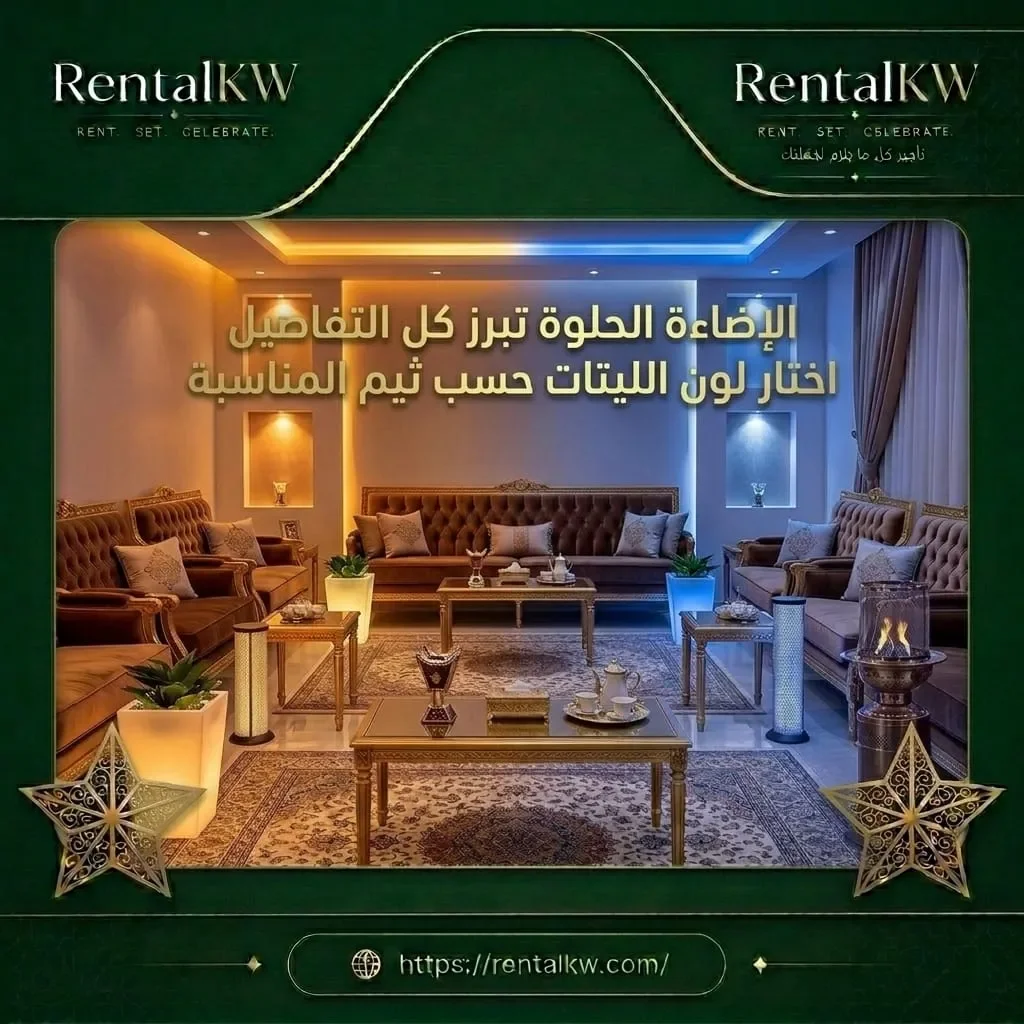
LED lighting costs by rental duration depend on several factors beyond the number of bulbs because LED technology is used in many products, including decorative strings, lighting nets, illuminated strips, and colored lighting units. Each type has different electrical specifications and installation methods, so all LED decorations should not be treated as a single category with a uniform price.
Many LED products offer good energy efficiency compared with certain traditional lighting technologies, but actual consumption depends on the electrical power of the equipment and the number of operating hours. A low-power decorative string differs from a large collection of decorative lighting units, even when both use the same technology.
Electricity consumption can be calculated using the relationship between power and time. If the total lighting power is 500 watts and the equipment operates for five hours daily over four days, the calculated consumption is 10 kilowatt-hours. This is an illustrative example rather than an estimate for any specific installation. Converting it into a monetary cost also requires knowing the electricity tariff applicable to the venue.
It is important to distinguish energy costs from rental charges. Electricity expenses may be relatively limited for some LED installations, while installation, transportation, and equipment reservation account for most of the price. Lower energy consumption therefore does not necessarily mean that every LED lighting system has a low rental cost.
Daily operating duration also influences equipment selection. Lighting used for extended hours may require reviewing permitted operating limits, ventilation around power supply units, and surrounding temperatures, particularly when installed in exposed locations during warm periods.
Color-changing or programmable LED installations may also include additional control units, affecting costs compared with fixed-color decorative strings. If the customer needs different lighting scenes each evening, the service may include programming or modifying those scenes during the event.
A common mistake is comparing LED strips and decorative strings based only on their length. Differences in power, bulb density, electrical supply methods, and protection ratings may produce entirely different costs and performance despite similar lengths.
The rental quotation should therefore identify the LED product type, electrical power, control method, and proposed operating hours, with equipment charges separated from technical services and energy costs when these are calculated independently.
When calculating LED lighting costs by rental duration, review the following:
-
Identify the LED product type before comparing prices: Decorative strings illuminated strips lighting nets and color-changing units differ in application connections and installation methods so products with similar specifications should be compared rather than relying on the technology name alone
-
Calculate electricity consumption from power and operating hours: Multiply the total power in kilowatts by the actual number of operating hours to obtain consumption in kilowatt-hours and then apply the venue's electricity tariff if you need to estimate energy costs
-
Separate energy expenses from equipment rental charges: Electricity may not represent the largest portion of lighting costs because transportation installation control units and equipment reservation can create separate expenses that do not necessarily decrease with lower energy consumption
-
Review the equipment's continuous operating limits: Confirm that power supply units connections and products are suitable for the required operating hours and ambient temperatures according to manufacturer instructions so extended use does not exceed permitted operating conditions
-
Determine whether color changes or programmed lighting scenes are required: Control systems may introduce different preparation and operating costs compared with fixed-color decorative lights so the number of required scenes and their switching times should be established before agreeing on a price
-
Do not estimate costs from lighting length alone: Two strips or strings of identical length may differ in bulb quantity electrical power protection level and power supply type making complete specifications essential for an accurate comparison
Lighting Installation Costs for Extended Events
Lighting installation costs for extended events are influenced more by the work required before the decorative lights are switched on than by the number of event days alone. Preparing a small building exterior may require limited time, while illuminating a large courtyard or installing strings at considerable heights may require a specialized team, access equipment, and suitable mounting arrangements.
Installation costs begin with examining the venue and identifying suspension points, cable routes, and electrical sources. If suitable mounting points are already available, the work may be simpler than at a venue requiring additional preparation. However, unapproved fixing methods should never be used simply to reduce costs.
For extended events, it is important to consider whether the installation can remain safe throughout the booking. Equipment suspended for one day and equipment remaining in place for an entire week may experience different conditions involving human movement or changing weather. Mounting methods must therefore suit the period of use and surrounding environment.
An installation quotation may include technician labor, equipment for reaching elevated locations, cable distribution, and operational testing. Additional work, such as modifying the design or moving decorative lights between venues, may be charged separately. The scope of service must therefore be understood before prices are compared.
One mistake that can increase costs is postponing the final design decision until installation day. Changing string locations or requesting additional lighting points after the team arrives may require extra equipment or working hours. Agreeing on a clear layout is more effective for controlling expenses.
Initial installation should also be distinguished from maintenance during the booking. Repairing a malfunctioning section or replacing a unit may be included in the service conditions of some suppliers, while certain situations, such as damage caused by misuse, may involve additional charges. This should be clarified in the contract.
Public or commercial venues must also comply with management requirements and applicable authority rules, particularly when lighting is installed on building exteriors or above public walkways. Permits or restrictions on mounting locations and working hours may apply depending on the venue and should be verified.
Dismantling after the event is a separate stage that should be included in the budget. Removing elevated strings and nets may require the same equipment and installation team used during the initial setup.
When reviewing lighting installation costs for extended events, confirm the following:
-
Request a site inspection or a clear technical description of mounting locations: The work required differs between a low building frontage a large courtyard and an elevated installation so mounting points and routes should be identified before technician labor and equipment charges are estimated
-
Establish whether access equipment is included in the price: Certain venues may require ladders work platforms or suitable lifting equipment and their costs should be clarified in the quotation rather than discovering additional charges when installation begins
-
Approve the lighting layout before the installation team arrives: Establishing string positions lengths and electrical connection points in advance helps reduce on-site changes that may add working hours or equipment not included in the original estimate
-
Verify that mounting methods are suitable for the rental duration: Suspension points and accessories must withstand expected conditions throughout the booking according to the technical assessment rather than relying on unsuitable temporary solutions simply because the lighting is decorative
-
Separate installation charges from modification and maintenance work: Ask which services are included if the design changes or some lights malfunction during the event so initial installation fees are not confused with the costs of subsequent work
-
Confirm that dismantling and appropriate venue restoration are included: Removing elevated lighting may require time and specialized equipment so responsibility and costs should be established before approving the final quotation
Decorative Light Rental Extension Costs
Understanding decorative light rental extension costs becomes important when an event continues beyond the agreed period or the customer decides to keep the lighting for another evening. An extension may appear straightforward because the equipment is already on-site, but it can affect the supplier's booking schedule and commitments to other customers.
An extension agreed upon before the contract ends must be distinguished from an unauthorized delay in returning equipment. In the first situation, availability can be checked and a clear additional price agreed upon. Delayed returns, however, may be subject to different conditions and charges stated in the agreement.
There is no universal additional-day rate that applies to every lighting rental company. Some suppliers calculate extensions using a fixed daily rate, while others offer a reduced price when equipment remains installed at the same venue. An extension may not be available at all if the equipment has already been reserved for another occasion.
Customers should also know when an extension must be requested. If dismantling is scheduled for the following morning, the team may already have arranged transportation and other assignments. It is therefore preferable to contact the supplier as soon as an additional day seems necessary rather than waiting until the original period ends.
The price may also change if the extension requires rescheduling dismantling, arranging an additional technical visit, or modifying operating hours. If the design remains unchanged and the service requirements do not change, the cost components may differ, but this depends on supplier policy and the contract.
A hypothetical example can illustrate the calculation. If a four-day decorative lighting booking costs KWD 80 and the extension quotation adds KWD 10 for the fifth day, the total becomes KWD 90, provided no other charges apply. These figures are included only to explain the calculation and do not represent actual prices or an offer from a company in Kuwait.
A common mistake is assuming that paying an additional amount guarantees continued use of the equipment. An extension requires supplier confirmation, particularly when a specific date has been arranged for transferring the decorative lights to another venue.
The extension should preferably be documented through a message or written amendment specifying the new deadline, additional amount, and any changes to operating and dismantling responsibilities, preventing disagreements when the event ends.
When requesting an extension to a decorative light rental, consider the following:
-
Contact the supplier before the contractual rental period expires: Requesting an extension early allows the company to check equipment availability and rearrange dismantling and transportation schedules instead of dealing with a delay after the collection deadline
-
Request a separate price for the additional day: Establish whether the extension is calculated at a full daily rate under a special package or with other charges because equipment already being on-site does not necessarily mean the extension is free or discounted
-
Check whether the same equipment has another confirmed booking: Decorative strings or nets may be allocated to another event after your contract ends so clear approval must be obtained before relying on continued use
-
Review how the extension affects dismantling and technical services: Changing the collection date may require adjustments to technician schedules or an additional venue visit so any related charges should be established
-
Distinguish approved extensions from unauthorized delays: Charges and conditions may differ between the two situations so the equipment return deadline should not be exceeded without permission even when the customer is willing to pay an additional amount
-
Document the new deadline and final amount in writing: Keep confirmation identifying the number of additional days the revised dismantling date and extra cost so both parties' responsibilities remain clear when the booking is closed
Lighting Prices Based on the Number of Points
Lighting prices based on the number of points depend on what the supplier means by a lighting point because the term may refer to an individual bulb, an electrical connection point, a mounting location, or a lighting unit within the design. Two quotations using the word point should therefore not be compared without confirming how each company defines it.
For example, a customer may request lighting for ten columns surrounding an event courtyard. One supplier may treat each column as a separate point requiring decorative strings and connections, while another counts each electrical outlet as one point even if it supplies several decorative sections. This difference can produce different estimates despite the requested design being identical.
The number of lighting points must also be distinguished from cable lengths. Two points may be close together and easy to install, while two others require longer cables or more complicated suspension work. Quantity alone cannot therefore determine a fair cost.
The required lighting density also influences calculations. Illuminating a building exterior with a limited number of powerful points may produce a different result from distributing many smaller bulbs. The design should be selected according to its visual purpose and the venue's characteristics rather than increasing the number of points without a clear benefit.
Electrical circuit capacity is another important technical consideration. Increasing the number of connection points or lighting units may require distributing loads across suitable circuits and using approved protective equipment. Numerous products must not be connected to one circuit without verifying electrical limits and manufacturer instructions.
When comparing prices, a layout showing lighting point locations and the types of decorative lights used at each location should be requested. This helps establish whether the quotation covers every required area or excludes elements that may later be added at extra cost.
Changing the number of points after installation may also affect the price. If the customer requests additional lighting around the entrance or expanded coverage of seating areas, more materials, connections, and working hours may be needed.
It is preferable to agree on the final number before installation while allowing for clearly priced modifications if required. This helps keep the budget under control without compromising the desired appearance.
When evaluating lighting prices based on the number of points, review the following criteria:
-
Request a clear definition of a lighting point in the quotation: Confirm whether a point means a bulb decorative unit mounting location or electrical outlet because differences in definition make comparisons of per-point prices between suppliers inaccurate
-
Connect the number of points to a specific distribution plan: The location of each point and the area it will illuminate should be shown so you can review the required coverage and avoid areas being excluded from the quotation
-
Review cable lengths between different points: Some locations may require long extensions or more complicated routes so establish whether cables and installation work are included in the price per point
-
Define the required lighting level rather than increasing quantities randomly: More points do not guarantee a better design if they are poorly distributed so lighting density and brightness should be chosen according to the space and intended decorative effect
-
Verify that electrical circuits can operate all lighting points safely: Loads must be distributed and suitable protection and connections selected by qualified specialists so increasing the number of units does not exceed permitted electrical limits
-
Agree on the price of adding points after the design is approved: Customers may need to expand lighting during preparation so it is useful to understand how new points are priced and whether they require additional installation or connection work
Multi-Day Decorative Lighting Packages
Multi-day decorative lighting packages help combine several types of equipment under one agreement when an event requires more than one form of decorative lighting. A package may include LED strings on the building exterior, net lights behind a photography area, and additional lighting around seating areas, with all installations remaining at the venue throughout the booking.
However, a combined package is not necessarily cheaper than renting each component separately. It may include services the customer does not need or quantities larger than required, so the package contents should be reviewed before assuming it offers savings.
Comparison begins by identifying the elements essential to the occasion. If the objective is to decorate a house entrance and the main seating area, additional lighting in spaces that guests will not use may be unnecessary. The clearer the installation scope, the easier it becomes to choose a suitable package without adding ineffective elements to the budget.
One potential advantage of combined packages is reducing repeated on-site work. A supplier may be able to transport and install equipment during one organized visit instead of sending multiple teams at different times. However, the amount saved depends on venue conditions and company policy and should not be assumed without a detailed quotation.
It is also important to establish whether all package components are available for the same duration. An offer may include certain decorative lights for the entire week while other units are reserved for the main celebration night only. The agreement must specify the use period of each element to avoid disagreements at collection time.
Package flexibility is another important consideration. A customer may need longer decorative strings without adding more net lights or may want to reduce the number of units while keeping the same booking duration. The effect of such changes on discounts or the total price should be established.
When comparing companies, looking only at the package name or advertised discount percentage is insufficient. The original price used to calculate the discount, equipment specifications, and included services must be understood because the package's actual value becomes clear only when equivalent installations are compared.
A multi-day package becomes a suitable choice when it combines genuinely required elements, provides a transparent total cost, and includes installation and dismantling schedules that match the event program.
When comparing multi-day decorative lighting packages, focus on the following:
-
Identify the equipment you actually need before selecting a package: Prepare a list of areas requiring decoration and the suitable lighting types so you do not pay for additional nets or strings simply because they are included in a combined offer
-
Review the specifications of every item in the package: String lengths net dimensions lighting colors and unit quantities should be identified so two packages do not appear similar by name while differing in their actual equipment quantities
-
Confirm the rental duration of each lighting type: Some components may have different use periods within the package so installation and dismantling dates should be specified for each element rather than assuming all equipment remains throughout the agreed days
-
Compare the package with separately priced essential items: Request individual prices for the main installations when possible so you can establish whether the combined offer provides genuine savings or adds unnecessary services
-
Ask how package modifications affect the final price: Increasing string lengths or removing one component may change the package conditions so the modification process should be understood before confirming the booking
-
Verify that transportation installation and dismantling are included: A package may appear attractive based on equipment prices while excluding essential work so the total cost should be compared after all required services have been added
How to Calculate Event Lighting Costs
Calculating event lighting costs systematically helps establish a budget before booking and avoids relying on unclear estimates. The process does not require advanced technical knowledge as much as it requires collecting cost components correctly and distinguishing fixed charges from amounts that change according to rental duration or equipment quantity.
The first step is to identify the required lighting types and quantities. A venue may need LED strings for its exterior, net lights for a photography area, and decorative lighting points around seating areas. Each component should be recorded separately so the design can be adjusted easily if the estimated cost exceeds the available budget.
The rental duration of each lighting type is then determined. Exterior lighting may remain installed for five days, while some additional decorations are used only on the main evening. This distinction prevents all equipment from being calculated using the same duration when actual periods of use differ.
Service charges are then added, including transportation, installation, dismantling, and any special work involving connections or mounting methods. If technical monitoring or design modifications are required during the occasion, it should be clarified whether these services are included or charged separately.
The total cost can be expressed using the following formula:
Total Cost = Equipment Rental + Transportation + Installation + Dismantling + Agreed Additional Services
If certain equipment is priced using a daily rental rate, its rental cost can be calculated by multiplying the agreed daily rate by the number of days, taking into account any supplier discounts or packages.
For illustration, suppose an occasion requires lighting for three days, with equipment rental costing KWD 45, transportation KWD 10, installation KWD 15, and dismantling KWD 10. The calculated total would be KWD 80 before any other services. These figures are hypothetical examples explaining the calculation method and are not verified prices from the Kuwaiti market.
It is preferable to compare a basic design with an expanded design. The basic arrangement may achieve the desired appearance using fewer strings, while the expanded version includes additional coverage of building exteriors or seating areas. This comparison helps identify the value of each addition before it is approved.
Some flexibility should also be left in the budget for potential changes, without treating any particular contingency amount as a universal rule for every occasion. The appropriate reserve depends on how clearly the design has been defined, the likelihood of modifications, and the supplier's conditions.
Ultimately, the approved budget should match a written quotation identifying all charges. Personal calculations help with decision-making, but they do not replace the final agreement defining what the rental company will actually provide.
To calculate event lighting costs accurately, follow these steps:
-
Create a separate list for each type of lighting: Record decorative strings nets lighting points and the required quantities of each so you can identify the cost of every design component rather than grouping all equipment under one unclear heading
-
Specify the use period of each component individually: Exterior lighting may operate throughout the event while other decorations are needed for only one evening so each type should be calculated according to its actual required duration before costs are combined
-
Add all charges unrelated to the equipment itself: Transportation installation dismantling connections and special mounting work must be included so the initial amount does not appear lower than the cost payable when the booking is completed
-
Apply discounts or packages according to the supplier's written conditions: If the quotation includes reduced rates for additional days or combined pricing use the actual agreed amount rather than assuming an unconfirmed discount
-
Compare a basic design with an expanded alternative: Calculate the cost of essential decorations first and then add optional lighting separately so the budget can be adjusted without affecting the main elements of the occasion
-
Match the final calculation with the rental quotation before payment: Review quantities specifications duration services and potential charges so the approved budget agrees with the written contractual obligations
Conclusion
Successful multi-day decorative lighting rental in Kuwait depends on understanding how costs are calculated before choosing strings, nets, or LED lighting units. Extending the rental period does not necessarily increase the price by the same proportion because some expenses relate to one-time preparation and installation while others change as equipment remains reserved.
The cost of renting string lights for three days differs from renting net lights for a week according to dimensions, quantities, mounting methods, and required services. LED technology alone is also insufficient to determine the price because product type, electrical power, control requirements, and operating conditions must be reviewed.
It is important to distinguish between daily rental rates and the total cost of the occasion. A quotation may include transportation, installation, dismantling, or additional services that do not appear in the advertised price. Comparing quotations with equivalent quantities, specifications, and durations is therefore more useful than immediately selecting the lowest figure.
The lighting design and operating schedule should preferably be determined before booking, with extension conditions and the costs of adding points or modifying installations clearly understood. A written agreement helps avoid unexpected charges and disagreements concerning dismantling dates or responsibility for equipment while it remains at the venue.
The best choice is a rental service that provides equipment suited to the location, transparent pricing for each component, safe installation, and an organized schedule throughout the occasion. This approach makes it possible to maintain coordinated decorative lighting for several days while controlling the budget and avoiding unnecessary expenses.
Frequently Asked Questions
Does decorative lighting rental become cheaper when booked for several days?
Some rental companies may offer packages or reduced prices for additional days, particularly when the equipment remains installed at the same location. However, discounts are not guaranteed with every supplier. A total quotation for the required duration should therefore be requested and compared with the cost of daily bookings.
How is the cost of decorative lights calculated for three days?
The calculation depends on the supplier's pricing policy. It may include equipment rental for three days plus transportation, installation, and dismantling charges, or the supplier may offer an all-inclusive package. A quotation showing equipment and service costs separately is preferable for understanding the total amount payable.
Can net lights be rented for an entire week?
Yes. Weekly rental can be arranged with companies offering this service, depending on equipment availability and rental conditions. Net dimensions, coverage area, the period equipment remains on-site, and protection and installation requirements should be defined. The product must also be suitable for its intended operating conditions.
Do LED lighting costs vary according to operating hours?
Electricity costs may vary according to total electrical power and operating hours, but LED equipment rental prices do not necessarily depend on operating hours alone. The price may include the equipment reservation period, installation, transportation, control units, and technical services. Energy expenses should therefore be distinguished from rental charges.
Are lighting installation charges calculated once or every day?
If the lighting remains installed at the same location, initial installation fees may be separate from daily rental charges, but pricing methods differ between companies. Changing the design, moving equipment, or reinstalling it may involve additional charges that should be agreed upon in advance.
How much does extending decorative light rental by one day cost?
There is no universal extension price. The amount depends on the type of lighting, supplier policy, equipment availability, and the agreed dismantling date. A special additional-day rate or charges associated with rescheduling collection may apply, so written approval and pricing should be obtained before the original booking ends.
Is it better to calculate lighting by the meter or by the number of points?
This depends on the installation type. Measurement by the meter may be appropriate for LED strings and illuminated strips, while some quotations use lighting points or unit quantities. The important factor is defining the measurement unit, equipment specifications, and distribution method so comparisons are accurate.
How can I choose a multi-day decorative lighting package without extra costs?
Begin by identifying lighting types, quantities, rental duration, and installation locations. Then request a written quotation covering equipment, transportation, installation, dismantling, and extension and modification conditions. Compare total costs between suppliers and confirm that all included components are necessary for the event design before booking.