
Simple vs Luxury Wedding Kosha Costs in Kuwait

In this article
- Simple or Luxury Wedding Kosha
- Simple and Luxury Wedding Kosha Prices
- Minimalist Wedding Kosha Designs
- Luxury Royal Wedding Kosha
- Affordable Acrylic Wedding Kosha
- Luxury Floral Wedding Kosha
- Choosing a Wedding Kosha Based on Your Budget
- Bridal Stage Decoration Costs
- Wedding Kosha Designs for Small Celebrations
- Comparing Wedding Kosha Designs
- Conclusion
- Frequently Asked Questions
Choosing a wedding kosha is not simply a decision about flower arrangements or the size of the backdrop. It is a decision that affects the wedding budget, photographs, and the way decorations are distributed throughout the venue. A simple kosha may appear more elegant than an elaborate design when it complements the space and lighting, while a luxurious kosha can create an impressive visual presence when its size and details suit the occasion. But is a luxury kosha worth the additional expense? And when is an affordable design the smarter choice? In this guide, we compare simple and luxury wedding kosha designs in Kuwait in terms of prices, materials, design, and rental options. We also explain how to choose a kosha that achieves your desired appearance without exhausting your wedding budget or sacrificing important details.
Simple or Luxury Wedding Kosha

When deciding between a simple or luxury wedding kosha, the real question is not which design is universally more beautiful, but which design best suits the wedding atmosphere, venue dimensions, and allocated budget. A kosha featuring a calm backdrop, an elegant seat, and a limited floral arrangement may create a sophisticated appearance, while a large design filled with decorative details may look unbalanced if placed inside a small hall or in front of a narrow photography area.
A simple kosha generally relies on reducing visual elements and highlighting one or two features clearly. The backdrop may have a single color with a lightweight decorative arch, a limited floral arrangement, and soft lighting. However, simplicity does not mean poor quality, because carefully selected materials and professional execution may produce a better result than a design containing numerous elements without visual harmony.
A luxury kosha, on the other hand, is often distinguished by a wider composition, more elaborate details, or materials and decorative pieces with a strong visual presence. Examples include layered backdrops, luxurious fabrics, large floral arrangements, and ornate seating. Nevertheless, luxury is not measured only by the number of decorative items, but also by color harmony, finishing quality, and the arrangement of individual elements.
It is important to distinguish between the size of a kosha and its aesthetic value. A larger design is not necessarily more luxurious, just as a smaller kosha is not always economical. A design covering a limited area may contain expensive natural flowers or custom-made decorative pieces, increasing its cost despite its simple appearance.
The nature of the wedding venue also influences the decision. If the hall already features prominent chandeliers and ornate walls, a restrained kosha may be more suitable because it avoids competing with the existing decorative details. A hall with a plain backdrop, however, may benefit from a more prominent design that creates a clear focal point around the bridal stage.
Photography must also be considered. The kosha is not merely decoration viewed by guests; it is also the background appearing in photographs of the couple and their families. Excessive details or reflective backdrops may create visual distractions unless they are coordinated with the lighting and camera angles.
For illustration, imagine two different wedding halls. The first is small, with a low stage and a walkway close to the guest tables. The second is spacious, with considerable distance between the stage and the seating areas. A simple kosha that preserves visual openness may suit the first venue, while the second may accommodate a larger design without appearing overcrowded. This is an illustrative design scenario rather than a description of an actual completed wedding.
The best decision begins by identifying what you want to emphasize during the celebration, then selecting the level of decorative detail that achieves this goal within your budget rather than being attracted to luxurious reference photographs without considering the venue's actual conditions.
When choosing between a simple and luxury wedding kosha, consider the following:
-
Evaluate how the kosha dimensions relate to the wedding hall: A restrained backdrop may create a greater sense of space in smaller halls while larger venues can accommodate wider compositions so the stage dimensions and distance from the guests should be established before deciding how elaborate the design should be
-
Distinguish simplicity from poor quality: A simple kosha can look sophisticated when the materials are coordinated the finishes are clean and the lighting is appropriate so an economical design should not be judged solely by the number of decorative elements it contains
-
Do not automatically consider more decorations a sign of luxury: Combining multiple backdrops dense floral arrangements and shiny decorative pieces may create visual clutter if there is no clear design concept connecting these elements
-
Choose a design that complements the venue rather than competing with it: When walls chandeliers and flooring already feature strong decorative details a restrained kosha may be more harmonious while a simpler hall can accommodate a backdrop with a stronger visual presence
-
Review the kosha from the main photography angles: The backdrop behind the couple the position of the seating and the distribution of decorative elements should be evaluated so decorations do not obscure faces or create distracting details in important photographs
-
Identify your aesthetic priorities before determining expenditure: If your main priorities are the seat backdrop and lighting there is no need to add elements that do not support these features but if you want a broad ceremonial setting you should allocate a budget suitable for its size and execution requirements
Simple and Luxury Wedding Kosha Prices
Simple and luxury wedding kosha prices in Kuwait vary according to design details, construction methods, and materials rather than the labels simple or luxurious alone. Two companies may offer a kosha under the same description while differing in backdrop dimensions, flower types, seating, lighting, and installation work. This makes a direct comparison between their prices potentially misleading.
Designs that rely on ready-made reusable pieces are generally less complicated than those requiring custom backdrops, structural modifications, or decorative elements not already available from the supplier. However, this does not mean every ready-made kosha will be cheaper than every custom design, because the quality, quantity, and condition of the pieces also influence the cost.
Flowers are among the elements that can significantly change the price. A kosha using high-quality artificial arrangements differs in material costs and preparation methods from a design relying on large quantities of natural flowers. The varieties of fresh flowers, their availability, seasonality, preservation requirements, and transportation methods may also affect the final amount.
Backdrops also vary considerably, including fabrics, decorative panels, acrylic, mirrors, and metal or wooden elements. Each material has different requirements involving cutting, mounting, transportation, and finishing. A relatively small backdrop may be expensive if it requires custom manufacturing, while a larger backdrop made from pieces already available to the supplier may be less complicated.
Lighting is another pricing factor. A simple design may rely on soft lighting already available in the hall, while another arrangement may require dedicated fixtures to highlight the backdrop and flowers or control lighting colors. It is important to establish whether lighting is included in the kosha price or provided as an additional service.
Transportation, installation, and dismantling charges are expenses some customers overlook. A large kosha may require a bigger vehicle, several installation workers, or more time to prepare the stage. The distance between the supplier and venue, access restrictions, and permitted working hours may also influence the cost.
There is no fixed amount that can reliably represent the actual price of every simple or luxury kosha in Kuwait without defining its specifications and obtaining current quotations from suppliers. Publishing one figure for each category may therefore create a misleading impression of the budget required.
The comparison can be understood through a hypothetical example. If a ready-made design including a backdrop, seating, and artificial flowers costs KWD 120, while another design requiring a custom-made backdrop, natural floral arrangements, and additional lighting costs KWD 350, the price difference relates to execution requirements rather than merely describing the second design as luxurious. These figures are illustrative only and do not represent verified prices or actual offers in Kuwait.
A written breakdown identifying the kosha components should therefore be requested instead of relying on a reference photograph and a total price. The photograph may show elements excluded from the quotation, such as flooring, lighting, an aisle, or additional floral arrangements.
When comparing simple and luxury wedding kosha prices, consider the following:
-
Request a detailed list of the kosha components included in the price: The quotation should identify the backdrop type and dimensions seating flowers lighting and additional decorative pieces so you do not compare a complete design with an offer that excludes elements visible in the reference photograph
-
Establish whether the pieces are ready-made or manufactured specifically for the wedding: Custom backdrops may require different materials labor and preparation from pieces already available to the supplier so the effect of customization on cost and preparation time should be understood
-
Compare natural and artificial flower costs according to type and quantity: Simply asking whether flowers are included is insufficient because their density distribution quality and preparation affect the price while natural flowers also have different supply preservation and installation requirements
-
Confirm whether lighting is included in the design price: Reference photographs may show a professionally illuminated kosha while the quotation excludes the lighting fixtures used so the included equipment and responsibility for operating and adjusting it should be specified
-
Review transportation installation and dismantling charges before approving the budget: Required work may vary according to kosha dimensions venue characteristics and permitted access times so the total amount should be established rather than relying only on the decorative equipment price
-
Do not use commercial labels as the basis for estimating cost: Descriptions such as economical royal or luxurious do not establish actual value unless accompanied by clear specifications that allow materials dimensions and services to be compared between suppliers
Minimalist Wedding Kosha Designs
Minimalist wedding kosha designs are a suitable option for couples who prefer understated elegance and arrangements that emphasize balance rather than excessive ornamentation. The minimalist approach involves reducing unnecessary elements and choosing clear shapes with comfortable visual spacing, allowing each part of the kosha to appear intentional rather than crowded.
A minimalist kosha does not mean using an empty backdrop or eliminating decoration altogether. The design may consist of a simple arch, coordinated geometric panels, or a soft fabric background with one seat and a limited floral arrangement. The objective is for a small number of elements to serve a clear visual purpose rather than adding details that do not improve the overall result.
Colors are particularly important in this style. Shades of white, ivory, and beige or other closely related muted colors may be used, but success depends on their harmony with the hall's colors, flooring, and seating. Not every minimalist kosha must be white, because one distinctive color can also be introduced when it is balanced with the remaining elements.
Material selection is another important consideration. A design containing relatively few pieces makes the quality of each individual component more noticeable. Poorly finished backdrop edges or uneven fabric may be easier to see than in a design filled with decorations. Simplicity therefore requires precise execution rather than merely reducing expenditure.
The space surrounding the seat also deserves attention. If the backdrop is excessively wide compared with the chair, the arrangement may look empty. Conversely, placing the seat too close to the side decorations can make the design appear crowded despite having few pieces. Balance depends on proportions and spacing rather than the number of decorative elements alone.
Soft lighting can emphasize the minimalist approach when used thoughtfully. Evenly distributed, diffused lighting may be more appropriate than changing colors or intense lighting that transforms a simple backdrop into an overly dramatic visual element.
From a photography perspective, this approach provides a background that can help emphasize the couple, wedding attire, and important details without strong visual competition from the decorations. However, coordination with the photographer remains necessary, particularly when shiny materials or very white backdrops are used because their appearance can be affected by lighting and camera exposure.
A minimalist kosha may be economical if it uses ready-made pieces, available materials, and a limited floral arrangement. However, it may become expensive if it includes custom design, premium materials, or handmade details. Minimalism should therefore not automatically be treated as another term for the lowest price.
Imagine a minimalist kosha consisting of a two-layer ivory backdrop, a simple seat, and a floral arrangement positioned on one side. This composition may create a balanced appearance when dimensions and lighting are appropriate. Adding numerous arches and scattered arrangements, however, may undermine the original design concept. This is an illustrative example intended to explain the style rather than describe a particular completed installation.
When choosing a minimalist wedding kosha, review the following:
-
Give every decorative element a clear function within the design: Choose the backdrop seat and flowers according to one integrated concept and avoid adding pieces that do not improve visual balance because successful minimalism depends on compositional clarity rather than numerous details
-
Use a limited and coordinated color palette: Muted shades can be combined or one primary color can be paired with a supporting color provided the combination harmonizes with the venue flooring lighting and seating so the design does not appear disconnected
-
Prioritize finishing quality over the number of pieces: Fabric details panel edges and connection points are more visible in simple designs so execution quality should be reviewed and reduced decoration should not become an excuse for careless finishing
-
Adjust the spacing between the seat backdrop and side elements: Proportions must remain balanced so the seat does not appear too small against a wide backdrop or trapped between closely positioned pieces even when the design contains few elements
-
Choose lighting that reinforces visual calmness: Diffused lighting should be considered while avoiding effects that overpower the arrangement unless they are an intentional part of the concept so the kosha retains its simple character in person and in photographs
-
Separate visual simplicity from low cost: A minimalist design may require premium materials or custom manufacturing so clear specifications should be requested and compared with the budget rather than assuming fewer decorative elements always mean an economical price
Luxury Royal Wedding Kosha
A luxury royal wedding kosha is distinguished by a strong visual presence that makes the bridal stage a central feature of the wedding hall design. This style relies on broad compositions, architectural details, coordinated ornamentation, and seating with a classical or royal character. However, success does not come simply from increasing the backdrop size or adding gold-colored decorations. It requires carefully considered proportions, suitable materials, and enough space to display the details without overcrowding.
Royal kosha designs differ from simple arrangements in the way the overall setting is constructed. They may feature a multi-level backdrop with decorative arches, columns, and panels containing raised patterns, together with a central seat that complements the overall style. These elements must follow a clear design concept so the kosha does not appear to be a collection of unrelated pieces assembled merely to suggest luxury.
The hall's dimensions influence the choice of a royal composition. If the ceiling is relatively low or the distance between the stage and guest tables is short, an oversized backdrop may reduce the sense of space. Larger halls, however, may accommodate multiple layers that create depth and help the bridal stage remain prominent from different distances.
Color selection also requires particular care. Gold, ivory, and champagne are shades that can be used in royal designs, but they are not essential requirements for luxury. A royal kosha may succeed with muted or dark colors when the materials and details harmonize with the hall. The most important consideration is avoiding combinations of different metallic shades that create unwanted variations in shine.
The royal seat becomes important when defining the focal point of the kosha. It may feature carved details, luxurious upholstery, or a decorative frame, but its comfort, stability, and appropriate height must be confirmed. The seat is used by the couple during the celebration and is not merely a display piece.
In practical terms, a royal kosha may require a longer installation period because of the number of pieces, their weight, and their mounting methods. The stage's capacity to support the required loads must also be reviewed, and heavy structures should not be added without approval from the venue management or an appropriate technical assessment.
Lighting influences how royal details appear. Raised patterns and layered backdrops require lighting that reveals depth without casting harsh shadows across the couple's faces. Direct lighting on highly reflective metallic surfaces may also create unwanted reflections in photographs.
Costs are affected by the composition's dimensions, number of pieces, materials, transportation, and installation work. A royal kosha assembled from ready-made reusable pieces may cost less than a smaller design requiring custom manufacturing, so the price cannot be determined from appearance alone.
For illustration, imagine a royal kosha in a spacious hall featuring three graduated arches, a central seat, and an ivory backdrop with restrained gold details. This composition may create an impressive appearance without covering every section in ornamentation, provided its proportions remain balanced with the venue.
When choosing a luxury royal wedding kosha, consider the following:
-
Determine the royal composition's size according to the actual hall dimensions: Measure the stage width ceiling height and available space in front of the kosha so large arches and columns do not overcrowd the venue or obscure existing decorative features
-
Choose architectural elements that belong to one design style: Patterns columns arches and backdrops should complement one another instead of combining unrelated ornamentation because harmony creates a more convincing royal character than the number of decorative pieces alone
-
Review the royal seat's quality comfort and stability: An ornate or oversized seat is not sufficient by itself because it must provide comfortable seating for the couple and have dimensions suitable for the stage and photography throughout the celebration
-
Verify the stage's ability to support heavy installations: Some royal backdrops contain multiple structures and panels so loads and mounting methods should be coordinated with venue management rather than relying on estimates without technical assessment
-
Test how lighting reflects from metallic and decorative details: Shiny surfaces may produce strong reflections in photographs so fixture direction and intensity should be adjusted to preserve decorative details and the couple's visual comfort
-
Request a breakdown distinguishing ready-made pieces from custom-manufactured elements: Royal design prices may vary considerably depending on the source of backdrops columns and seating so understanding these details helps evaluate the actual cost rather than relying only on the luxury label
Affordable Acrylic Wedding Kosha

An affordable acrylic wedding kosha is worth considering when looking for a modern design with clean lines and limited decorative details. Acrylic is used in some backdrop elements, decorative panels, and transparent or colored display pieces. It can give the kosha a visually lightweight appearance when coordinated properly with lighting and seating.
However, describing a kosha as acrylic does not mean every component is made from the same material. Visible panels may be acrylic while the supporting structure uses other materials suitable for mounting. The panel thickness, installation method, edges, and suitability for the intended design should therefore be established.
One advantage of acrylic is its potential use in simple geometric shapes, panels displaying the couple's names, or decorative elements with a transparent appearance. This may suit modern wedding halls featuring muted colors and open spaces. However, the result depends on avoiding excessive panels or reflective effects.
The cost of an acrylic kosha is influenced by how its pieces are prepared. Standard panels already available from the supplier may suit a limited budget, while specially designed shapes may require additional cutting, forming, printing, or engraving work that increases the execution cost. The possibility of using ready-made pieces should therefore be discussed before commissioning new manufacturing.
A common mistake is assuming acrylic requires no special care during transportation or installation. Its surfaces may become scratched or show fingerprints and marks caused by unsuitable cleaning methods, particularly on transparent pieces. The panel condition and cleaning procedures should therefore be reviewed before the final design is approved.
Light reflection also deserves attention. An acrylic backdrop may look attractive in a reference photograph but reflect certain lighting sources or reveal unwanted objects behind it when installed in a different hall. Studying the backdrop location, camera angles, and lighting type can help reduce these problems.
Acrylic panels should not be relied upon as structural load-bearing components without appropriate technical design. Their mounting method and supporting framework must suit the dimensions, weights, and conditions of use, especially when the pieces are elevated or located near guest circulation areas.
From a budgeting perspective, a simple acrylic backdrop can be combined with elegant seating and a limited floral arrangement to create a balanced appearance. This may be more suitable than a design containing numerous panels and custom pieces that add little visible value.
The genuine economic benefit appears when the supplier uses suitable reusable pieces with clean execution and coordinated details rather than reducing costs at the expense of installation stability or material quality.
When choosing an affordable acrylic wedding kosha, review the following details:
-
Verify the panel type thickness and surface condition: Acrylic specifications should be established and the panels inspected for visible scratches or defects because transparent and shiny surfaces can reveal these imperfections clearly under venue lighting
-
Compare ready-made pieces with custom-manufactured designs: Standard backdrops may be more suitable for the budget while special shapes can require additional cutting engraving or printing so customization costs should be understood before approval
-
Determine the appropriate transparency level and backdrop color: Transparent acrylic may reveal walls or equipment positioned behind the kosha so the actual hall background should be examined before selecting panels
-
Review panel mounting methods and their supporting framework: Fixings must suit the dimensions and weights of the pieces and the design's safety must not depend on panels that are not intended to carry structural loads
-
Test lighting reflections before approving the final appearance: Lighting fixtures or cameras may be reflected in certain surfaces so acrylic positioning should be coordinated with the lighting arrangement and main photography angles
-
Keep decorative additions limited and purposeful: A small floral arrangement or personalized name panel can complement the backdrop without adding numerous panels and pieces that increase costs and weaken the design's economical character
Luxury Floral Wedding Kosha
A luxury floral wedding kosha uses flowers as the main element of the composition, whether arranged around the seating, on either side of the backdrop, or within extended arches and installations. The success of this design depends on selecting colors, density, and proportions carefully rather than simply increasing the number of flowers without a clear visual purpose.
Planning begins by identifying the desired flower types. Natural flowers differ from artificial ones in appearance, preparation, care, and cost. Some designs combine both types, but doing so requires careful coordination to avoid unwanted differences in color, size, or petal texture.
When selecting natural flowers, the availability of the requested varieties on the wedding date must be considered. Certain flowers may vary in availability according to season and supply chains, while temperature, transportation duration, and storage methods may affect their condition when installed. Acceptable alternatives should therefore be discussed before the design is confirmed.
A floral kosha's luxury is not measured by flower quantity alone. Dense arrangements around one focal area may create a more balanced appearance than distributing flowers evenly across the entire backdrop. Varying the heights and sizes of floral compositions can also add visual depth without covering every section of the stage.
Colors must be coordinated with the bride's dress, hall decorations, and general lighting. White and ivory flowers may appear similar under certain lighting conditions but show different shades in photographs. Darker colors also require suitable lighting so their details remain visible.
Preparation and waste-related costs are another important consideration. Natural arrangements may require more flowers than the number visible in the completed design because of sorting, preparation, and mounting. They may also need supporting materials and methods for maintaining freshness. The supplier should specify the expected arrangement density rather than relying only on the description luxury flowers.
Costs may also change according to how the flowers are mounted. Arrangements placed in individual containers differ from suspended floral compositions or flowers extending across elevated structures. Mounting methods must be secure and prevent elements from falling over the couple's seating area.
A common mistake is selecting a floral design from a photograph without confirming that the quotation includes the same arrangement density. A supplier may use alternative varieties or fewer flowers to meet a specified price, which can be acceptable if these changes are clearly agreed upon before execution.
When the budget is limited, most of the floral allocation can be directed toward areas appearing in the main photographs, such as around the seat or on one side of the backdrop, instead of spreading flowers across locations that provide little visual impact.
When choosing a luxury floral wedding kosha, consider the following:
-
Identify the natural and artificial flower varieties used in the design: The varieties colors and proportion of each type should be established so the final result does not differ from the reference photograph because flowers were substituted without prior agreement
-
Ask about natural flower availability on the wedding date: Available varieties may change according to season and supply so alternatives with similar colors and appearances should be identified and approved before any substitution is made
-
Review arrangement density rather than accepting the description luxury flowers alone: Request clarification of which areas will contain dense floral compositions and which will remain more restrained because flower quantity and distribution affect both appearance and cost
-
Coordinate flower colors with the venue lighting and decorations: Colors may appear different under various lighting sources so a harmonious palette should be selected that preserves floral details in person and in photographs
-
Verify how natural flowers will be prepared and preserved before installation: Supply transportation and preparation schedules must suit the selected varieties and venue conditions so arrangements reach the celebration in suitable condition
-
Direct the budget toward areas most visible in photographs: If flowers are expensive they can be concentrated around the seating or central backdrop rather than distributed evenly across wide areas that do not provide the same aesthetic impact
Choosing a Wedding Kosha Based on Your Budget
Choosing a wedding kosha based on your budget requires setting an appropriate spending limit before comparing photographs and designs. The problem is usually not a lack of attractive options, but selecting a design whose requirements exceed the available amount and then trying to remove elements randomly. This can destroy the balance that originally made the design appealing.
The better approach is to allocate a separate budget for the kosha within the overall wedding expenses, remembering that the venue, hospitality, photography, and other services also require their own allocations. No fixed percentage is suitable for every wedding because couples' priorities differ according to the occasion, guest numbers, and desired decoration level.
Once the amount is established, kosha components can be divided into essential and optional elements. Essential elements generally include a suitable backdrop, seating, and the equipment required to keep the design stable, while certain side decorations or special additions may be reduced or omitted.
Reducing the budget does not necessarily mean making every element smaller. Choosing one well-made backdrop may be better than using several poor-quality backgrounds, while concentrating flowers in one area may be more effective than spreading a small quantity across a large space where they appear scattered.
A useful comparison method involves three design levels: a basic option that achieves the desired appearance using the fewest suitable elements, an intermediate option offering noticeable improvements, and an expanded option with additional details. Differences between these levels should be defined in materials, quantities, and services rather than marketing names alone.
For example, if the budget allocated to the kosha is KWD 200 as a hypothetical amount, the first step is to establish which designs available suppliers can execute within that limit. It would be incorrect to assume that a particular amount guarantees either a luxurious or economical kosha without knowing actual prices and quotation contents.
Rental can help control costs when ready-made pieces suit the wedding concept. However, requesting numerous modifications to a standard design may increase expenses and reduce the benefit of using equipment already available to the supplier.
A common mistake is allocating the entire amount to visible decorations while overlooking transportation, installation, and dismantling charges. The budget should therefore be treated as the total amount for the service rather than the price of the backdrop and seating alone.
The best financial choice is one that achieves a clear priority for the couple without paying additional amounts for elements that will not meaningfully improve the wedding experience or photographs.
When choosing a wedding kosha according to your budget, follow these criteria:
-
Set an inclusive spending limit before browsing designs: The amount allocated to the kosha should cover all related services so you do not select an apparently affordable design only to discover that transportation installation and dismantling exceed the budget
-
Rank kosha elements according to their importance to you: If the backdrop and seating matter more than side decorations direct spending toward them first rather than distributing the budget equally among details that do not provide the same aesthetic value
-
Request three clearly defined design levels from the supplier: Compare a basic intermediate and expanded option while identifying the additional materials flowers or lighting offered at each level so price differences correspond to genuine improvements
-
Replace weak distribution with concentrated arrangements when reducing costs: Using a limited quantity of flowers in a prominent location may be better than spreading them across a wide area in a way that makes the design appear incomplete
-
Take advantage of ready-made pieces when they suit the wedding concept: Backdrops and seating already available to the supplier can reduce the need for custom manufacturing but their condition quality and suitability for the space must be confirmed before approval
-
Do not exceed the budget for details that will barely be noticed: Review the effect of every addition on the kosha's appearance guest experience and main photographs so repeated small decisions do not lead to a substantial increase in the final cost
Bridal Stage Decoration Costs
Bridal stage decoration costs differ from the price of a kosha consisting only of a backdrop and seating because the stage may include additional elements involving flooring, steps, edges, finishes, lighting, and surrounding installations. A kosha design may fit the budget, but preparing the stage itself can introduce expenses that were not initially considered.
Cost assessment begins by establishing whether the wedding hall provides an existing stage or requires a separate installation. If a permanent stage with suitable dimensions is available, the work may be limited to covering certain surfaces and arranging the backdrop. Another venue may require a temporary stage built according to clear technical requirements.
A distinction must be made between decorations covering the stage and the structure supporting it. Decorative materials do not eliminate the need for a stable, safe platform capable of supporting the required loads and use. If the design includes an elevated stage, structural specifications, steps, and appropriate protective measures should be reviewed in coordination with venue management.
Floor finishing is another factor affecting the cost. Some designs may use fabrics, specialized coverings, or decorative panels, each with different requirements for mounting, cleaning, and appearance under lighting. Surfaces must be suitable for walking and sitting without creating slipping or tripping hazards.
Stage dimensions also influence the quantity of materials required. A wide stage may need more covering material and longer edge finishes, while multi-level platforms require additional details around steps and joints. The price therefore depends on more than the backdrop area alone.
Stage costs may include decorating the steps leading to the couple's seating or adding decorative elements along the sides. These details must allow the couple to move comfortably and safely, particularly when long garments or certain types of footwear make poorly defined steps more difficult to navigate.
A common mistake is choosing shiny flooring without testing how lighting reflects from it. The surface may look attractive in design photographs but produce strong reflections or reveal marks from movement during the celebration.
The stage must also be coordinated with the photography team. Its height and the available space in front affect group photography angles, while elevated decorations along the edges may obscure clothing or faces in certain photographs.
When requesting a quotation, establish whether it includes complete stage preparation or only decorations placed on a platform provided by the venue. This distinction is essential for understanding costs and avoiding duplicated or omitted work.
When calculating bridal stage decoration costs, review the following:
-
Establish whether the wedding hall provides a ready-to-use stage: The existing stage dimensions and condition should be identified together with any covering or modifications required because building a separate stage differs financially and technically from decorating a permanent one
-
Separate structural costs from decorative finishing expenses: One quotation may include a supporting platform steps flooring and backdrop while another covers decoration alone so the service components should be established before comparing prices
-
Choose flooring finishes suitable for movement and photography: The surface should be stable and appropriate for walking while shine and reflections are reviewed so the aesthetic appearance does not create movement difficulties or unwanted photographic effects
-
Review step and edge designs before approving decorations: Access steps must be clear and suitable and should not be obscured by flowers fabrics or decorative elements that could interfere with the couple's movement
-
Calculate how stage dimensions affect material quantities: Every increase in width depth or number of levels may influence covering and finishing work so actual measurements should be provided to obtain accurate pricing
-
Coordinate stage height with photography and seating requirements: Height seat position and front decorations can affect group photographs so the arrangement should be evaluated from guest and camera perspectives rather than from the design concept alone
Wedding Kosha Designs for Small Celebrations
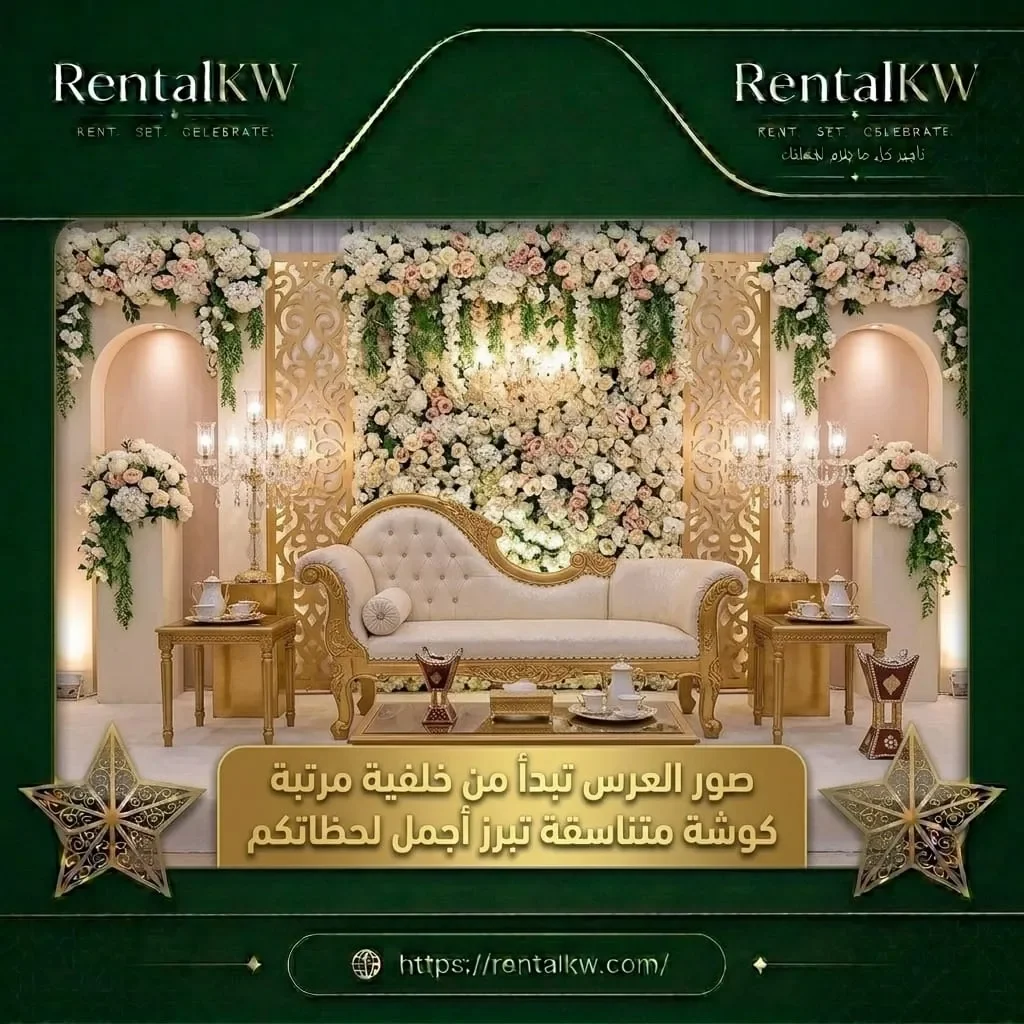
Choosing wedding kosha designs for small celebrations requires understanding the occasion before determining the decorative style. A wedding may take place in a compact hall, a private home, or a family event venue. These locations differ in dimensions, furniture arrangements, and circulation routes. The success of the kosha therefore depends on using the available space without occupying more room than necessary.
Small weddings do not necessarily require extremely simple kosha designs. An arrangement may contain elegant details and distinctive flowers, but its dimensions must suit the venue. A strong visual presence can sometimes be achieved with a backdrop of limited width and one prominent decorative feature instead of a wide composition containing numerous pieces.
The practical starting point is measuring the wall or area designated for the kosha while accounting for the space needed in front of it for photography and seating. A backdrop may appear suitable when the venue is empty but become inconvenient once chairs are positioned or guests gather to take photographs.
Entrance and exit routes must also be considered. At home celebrations, the kosha may be close to a doorway or main passage, so decorations and mounting bases must not extend into circulation areas. Safe access to exits must also be maintained without obstruction.
A kosha positioned against a suitable wall may be more practical than a design requiring a deep framework that occupies a large portion of the hall. However, mounting methods must suit the wall and have the property owner's approval. Unsafe suspension methods should not be used merely to save space.
Muted colors can help create a balanced appearance in some smaller venues, but the choice should not follow a rigid rule. Dark colors may also work successfully when used thoughtfully with suitable lighting and a coordinated backdrop.
Seating should suit the number of people expected to sit on the kosha. A comfortable two-person seat may be better than a large sofa occupying most of the stage width, particularly when photography space is limited.
Financially, a small kosha may save on certain materials and installation work, but it is not necessarily the cheapest option if it contains custom pieces or expensive natural flowers. Prices should therefore be evaluated according to the actual design rather than the size of the celebration alone.
Imagine a small family wedding requiring a backdrop of limited width, an elegant seat, and a floral arrangement on one side. This design may create a suitable presence if it preserves enough space in front of the kosha for family members to stand and take photographs without crowding.
When choosing a wedding kosha for a small celebration, consider the following:
-
Measure the available space after accounting for furniture rather than before it is arranged: Guest tables seating locations and photography space must be included so the kosha does not appear suitable on a plan only to obstruct actual venue use
-
Choose a shallow backdrop when circulation routes are close to the stage: A flat design or one positioned near the wall may be more suitable than multi-layer structures extending into the seating area
-
Keep entrances and walkways unobstructed: Mounting bases and floral arrangements must not extend into circulation routes or block exits because the kosha's appearance should never compromise movement around the venue
-
Balance the seating dimensions with the backdrop width: An oversized seat may make a small kosha appear crowded so dimensions should provide comfort while leaving suitable room for side decorations and photography
-
Use one prominent decorative feature instead of distributing numerous details: An elegant arch or concentrated floral arrangement can give the kosha a distinctive character without adding multiple pieces that consume space and budget
-
Determine costs from materials and services rather than guest numbers alone: A wedding may be small but still require custom installations so design components and execution charges should be reviewed rather than assuming limited celebrations are always inexpensive
Comparing Wedding Kosha Designs
Comparing wedding kosha designs helps couples make a balanced decision between appearance, cost, and venue characteristics, especially when many available photographs show designs that seem equally attractive but differ in their execution requirements. A proper comparison does not begin by asking which style is most popular. It begins by identifying what distinguishes each approach and whether its characteristics suit the wedding.
Minimalist kosha designs emphasize calm visual spaces and limited elements, while royal kosha designs rely on architectural details and a strong presence. Acrylic kosha designs may suit a contemporary style favoring geometric shapes and transparent materials, while floral kosha designs make flowers the principal feature of the composition.
Differences between styles do not mean one is superior in every situation. A royal kosha may suit a spacious hall with a high ceiling, while a minimalist arrangement may achieve greater harmony in a small modern venue. A concentrated floral design may also suit a medium-sized celebration without requiring an oversized backdrop.
It is important to compare designs under similar photographic conditions. A kosha may appear in a promotional photograph with professional lighting and a wide camera angle, while another seems less attractive simply because the photograph is of lower quality. Real installation photographs from different angles should therefore be requested when available, with confirmation that they represent the design actually being offered.
The ability to modify a design also influences the decision. A supplier may allow changes to fabric colors, floral distribution, or seating type, while certain ready-made backdrops offer limited customization. These limits should be understood before selecting a design that depends on numerous alterations.
Installation time should also be compared. A complicated kosha may require longer preparation than a simple design, potentially affecting the hall's setup schedule if another event takes place beforehand or access time is limited. This factor should not be overlooked when choosing between arrangements.
Financially, quotations should be compared at equivalent service levels. It would be inaccurate to compare the price of a simple kosha that includes transportation, installation, and lighting with the price of a luxury kosha covering only the backdrop and seating.
A practical comparison can be made by evaluating four aspects of each design: suitability for the space, desired appearance, material quality, and total cost. Ease of installation and customization can also be included when wedding circumstances make these factors important.
The best result comes from choosing according to the wedding's actual needs rather than the popularity of a design or the quantity of decorations. A successful kosha provides the couple with a coordinated backdrop, suits the venue, and remains within the agreed budget.
When comparing wedding kosha designs, use the following criteria:
-
Compare styles according to their actual characteristics rather than commercial names: Minimalism relies on visual simplicity while royal designs emphasize ornamental compositions acrylic highlights contemporary materials and floral kosha designs use flowers as the main feature so the style should be selected according to the wedding concept
-
Request real photographs representing the agreed execution standard: Promotional images may differ from the final venue appearance in lighting and camera angles so viewing clear completed installations from several perspectives helps establish more realistic expectations
-
Review whether colors seating and backdrops can be modified: Some designs allow simple adjustments while others require new manufacturing so customization limits and their effect on the price should be understood before approval
-
Compare installation time with the hall's available preparation window: Multi-piece backdrops and large floral arrangements may require additional working hours so the design must be achievable within the permitted schedule
-
Standardize included services when comparing prices: The comparison should cover equivalent backdrops seating flowers lighting transportation installation and dismantling so one design does not appear cheaper simply because essential services are excluded
-
Choose the design offering the best balance between appearance budget and space: The decision should not depend solely on kosha size or popularity but on its ability to create a coordinated setting suitable for photography and seating without unjustified costs
Conclusion
When deciding between a simple or luxury wedding kosha in Kuwait, there is no single answer suitable for every celebration. The best design is the one that harmonizes with the hall's dimensions, existing decorations, the couple's priorities, and the available budget. It is not necessarily the largest design or the one containing the greatest quantity of flowers and ornamentation.
A minimalist kosha may suit couples who prefer understated elegance and clean lines, while a royal kosha creates a strong ceremonial presence in halls with sufficient space to display its details. Acrylic can provide a contemporary appearance, while floral kosha designs stand out when flower arrangements are intended to be the main decorative feature.
Prices vary according to materials, dimensions, execution methods, flower varieties, seating, lighting, and accompanying services. A photograph or marketing description is therefore insufficient for establishing the budget. A clear quotation identifying every component and expense should be requested.
It is preferable to begin by measuring the available space and establishing the spending limit before comparing realistic designs that can actually be installed. Stage details, ease of movement, and photography angles should also be reviewed so the kosha is not merely attractive in reference photographs but unsuitable for the actual wedding conditions.
The most successful choice is a kosha rental service offering a coordinated design, appropriate materials, organized execution, and transparent pricing without unnecessary additions. Genuine luxury does not depend on excessive spending, but on carefully selecting the details that give a wedding an elegant and balanced appearance.
Frequently Asked Questions
Is a simple kosha better than a luxury kosha for weddings?
This depends on the hall's dimensions, existing decorations, and available budget. A simple kosha may be more harmonious in smaller venues or halls with extensive ornamentation, while a luxury kosha may suit spacious venues that can display its details without overcrowding. Neither type can be considered universally better.
How much do simple and luxury wedding kosha designs cost in Kuwait?
Prices vary according to backdrop dimensions, material types, flowers, seating, lighting, and transportation, installation, and dismantling charges. A fixed price cannot be established for either category without knowing the design specifications and obtaining current supplier quotations. Requesting a detailed offer identifying every included component is the most reliable approach.
Are minimalist kosha designs suitable for luxury weddings?
Yes. A minimalist design can give a wedding a sophisticated appearance when it uses high-quality materials, coordinated colors, and thoughtfully distributed elements. Luxury does not require excessive ornamentation, and a restrained design can suit even a large hall when its proportions are carefully balanced.
Are acrylic kosha designs cheaper than traditional kosha designs?
Not necessarily. An affordable acrylic kosha may be less complicated when it uses ready-made panels and a limited design, but it may become expensive if custom cutting, shaping, or printing is required. Materials, dimensions, finishing quality, and included services must be compared before judging the price.
What is the difference between natural and artificial floral kosha designs?
Natural and artificial flowers differ in supply methods, preparation, care requirements, and potential for reuse. Natural flower costs may be influenced by variety, season, and availability, while artificial flowers vary in quality and price according to their materials and details. Both types can be combined when the overall design remains harmonious.
How can I choose a beautiful wedding kosha on a limited budget?
Begin by setting a total budget covering the backdrop, seating, flowers, installation, and other services. Then select the elements that most noticeably influence the kosha's appearance. A well-made ready-to-use backdrop, a concentrated floral arrangement, and suitable lighting may be preferable to adding numerous pieces that contribute little real value.
Do small weddings need specially designed kosha arrangements?
Small weddings require designs that suit the available space, guest movement, and photography area. A shallow backdrop, appropriately sized seating, and concentrated decorations may work better than a large kosha that occupies seating space or obstructs walkways.
What should I check before booking a wedding kosha?
Review the design dimensions, materials, flower types, seating, lighting, stage components, and services included in the price. Installation and dismantling times, customization options, and clear photographs of the expected result should also be agreed upon, with all important details documented in a written quotation.