
How Many AC Units Does Your Event Tent Need
In this article
- How Many AC Units Does a Tent Need?
- Number of AC Units Based on Tent Size
- Calculating AC Requirements for an Event Tent
- AC Units for a 100-Guest Tent
- AC Units for a 200-Guest Tent
- Suitable AC Capacity for Tents
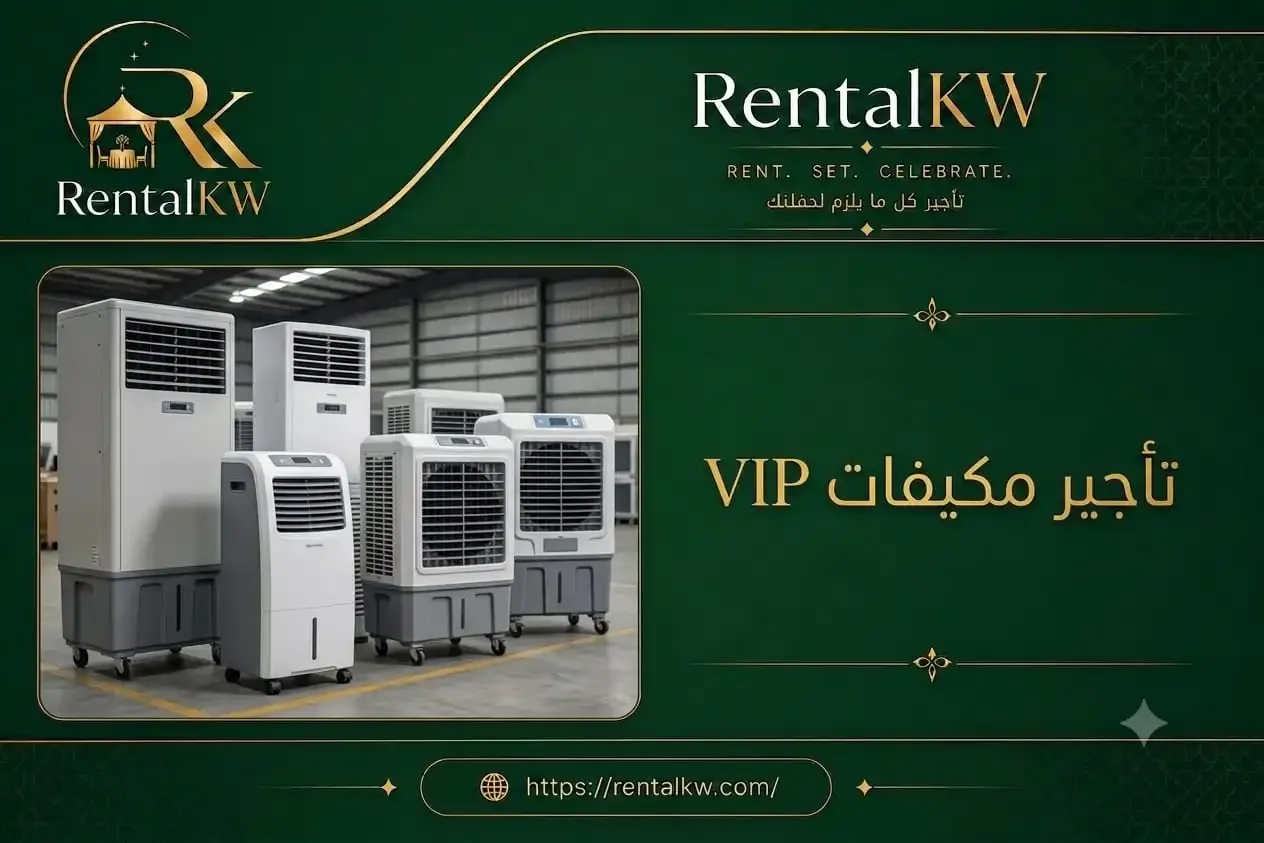
- Number of Evaporative Coolers for a Tent
- Number of Floor-Standing AC Units for an Event
- Cooling a Tent Based on Guest Count
- Choosing the Right AC for Tent Size
The question how many AC units does your event tent need? cannot be answered with a fixed number before the details of the tent are known. Two tents with exactly the same floor area may have noticeably different cooling requirements because of their height, guest count, event time, sun exposure, frequently opened entrances, and the type of AC equipment being used. The number of units alone also does not reveal the available cooling capacity because individual units can have very different capacities. For this reason, a proper calculation begins by estimating the actual cooling load and then selecting the appropriate AC type and capacity before determining how many units are required. This approach helps avoid the mistake of using many low-capacity units or relying on too few AC units that cannot handle the conditions inside the tent once it is filled with guests.
How Many AC Units Does a Tent Need?

When asking how many AC units does a tent need, the first step is to shift the focus away from simply counting units and toward calculating the cooling requirement. Having four AC units, for example, tells us very little unless we know the capacity of each unit, its type, and the conditions in which it will operate. There is therefore no professional answer such as saying that a tent needs three or five AC units based only on its external appearance.
The calculation begins by identifying the dimensions of the tent, its approximate height, and how enclosed its sides are. The next factor is the number of guests expected to be inside at the same time rather than the total number of invited guests. People add heat to the space, while lighting, event equipment, and some service equipment can also increase the heat load inside the tent.
The time of use is equally important. A tent that receives guests after sunset is different from one that begins operating while exposed to daytime sunlight. The color and characteristics of the tent covering, its location, and the amount of surrounding shade can also affect heat gain.
Entrances are another major factor. A doorway that remains open because of constant guest and hospitality movement allows continuous air exchange with the outdoors and can make cooling more difficult than in a similar tent with less traffic.
Once this information is collected, the cooling load can be estimated and suitable units selected by a qualified provider rather than relying on a general number that ignores the actual event conditions.
To determine how many AC units a tent needs, it is better to:
• Record the tent dimensions, height, and degree of enclosure because floor area alone does not describe the true volume of air that needs to be cooled
• Determine the highest number of guests expected inside the tent simultaneously because the cooling load is more closely related to peak occupancy than to the total invitation list
• Explain the event time and how much direct sunlight the tent receives so external heat gain can be included when evaluating the cooling requirement
• Consider entrances and the movement of guests and hospitality staff because repeated exposure to outdoor air can increase the cooling load the system must handle
• Identify the type and capacity of every AC unit before discussing the number of units because two units with different capacities cannot be treated as equivalent cooling solutions
• Use a qualified provider to estimate the load and select suitable capacity when the setup is large or conditions are complicated instead of relying on a rough rule that may result in inadequate cooling during the event
Number of AC Units Based on Tent Size
Searching for the number of AC units based on tent size makes sense because floor area is usually one of the first pieces of information available when planning an event. However, area is only a starting point and should not become the only factor used in the calculation.
Consider a simple example without assuming fixed technical figures. Two tents have the same floor area. The first has a relatively low ceiling, is used at night, has a limited number of guests, and has controlled entrances. The second is taller, begins operating during a hotter part of the day, receives more guests, and has constant movement through its entrances. It would not be reasonable to assign the same number of AC units to both tents simply because their floor areas are identical.
Tent height changes the volume of air inside the space. A large tent is also not necessarily one uniform zone. It may contain a heavily occupied main seating area, a reception section, service areas, and walkways, so it is important to know where the greatest cooling load is concentrated.
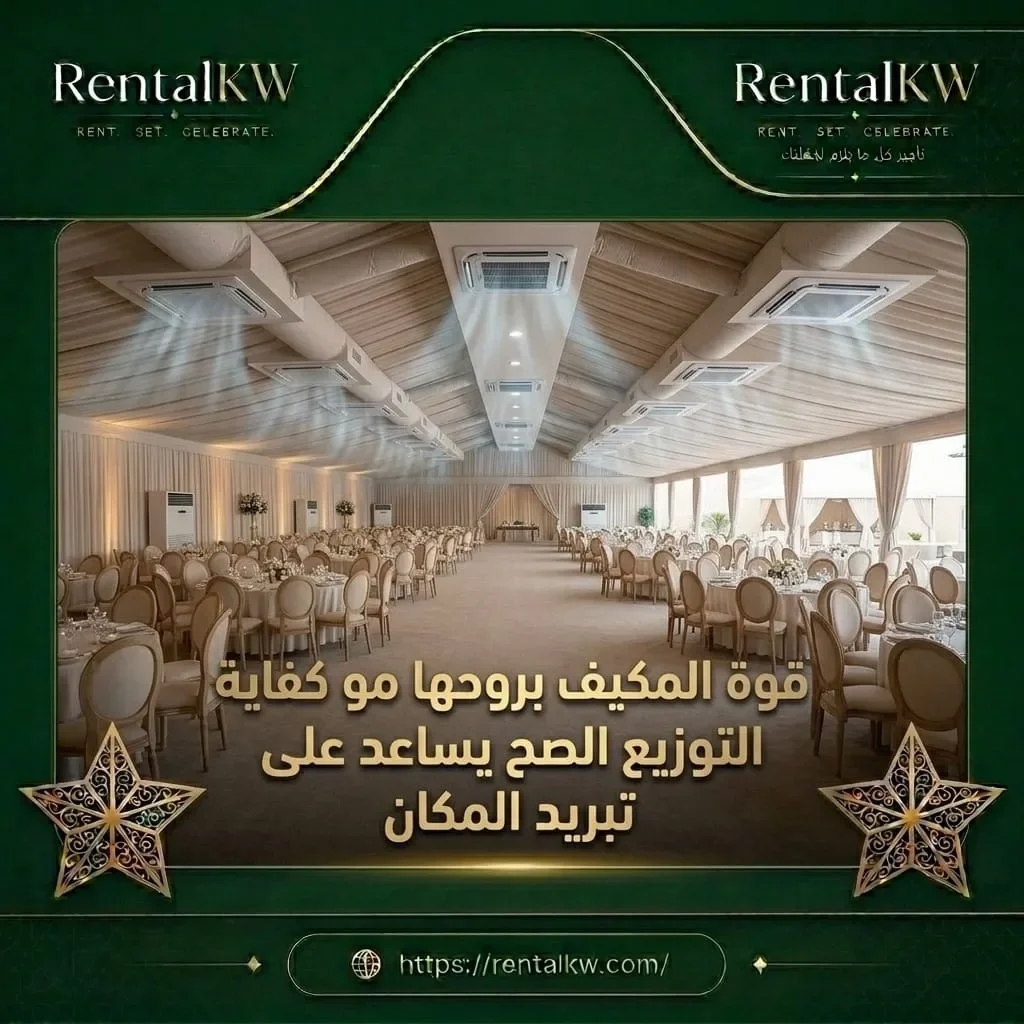
AC distribution also affects the calculation. A powerful unit positioned poorly may leave some sections of the tent less comfortable, while a carefully planned distribution can help conditioned air reach the areas where guests actually sit.
The number of units should also not be confirmed before the capacity of the proposed AC equipment is known. If the AC model or capacity changes, the required number of units may change as well.
When determining the number of AC units based on tent size, it is better to:
• Use tent area as a starting point and then include height, guest count, sun exposure, and entrances rather than converting every particular floor area into a fixed number of AC units
• Consider the internal volume when the tent height is significantly different because two tents with identical floor areas can contain very different volumes of air
• Divide the tent into use zones when guest density is uneven so cooling can be directed toward areas carrying the highest actual load
• Know the actual capacity of the proposed AC units before confirming the quantity because changing unit capacity can increase or decrease the number of devices required to meet the same load
• Review unit positions and airflow paths alongside the cooling calculation because capacity on paper will not provide the best result if air distribution is poor
• Reassess the requirement if the tent area, height, or guest count changes before the event because the previous calculation should not automatically be reused after important inputs have changed
Calculating AC Requirements for an Event Tent
A professional approach to calculating AC requirements for an event tent involves identifying and combining the different sources of heat load instead of searching for a shortcut based on one factor. The objective is to determine how much heat the cooling system must handle during the most demanding expected period of the event.
The first source is the outdoor environment. Temperature, direct sunlight, and the characteristics of the tent covering all affect the amount of heat entering the space. Outdoor air entering through doors and openings is another factor. As guest movement increases, maintaining comfortable indoor conditions can become more challenging.
Internal heat loads must then be considered. Guests themselves produce heat, which is why a full tent has different cooling requirements from the same tent when it is nearly empty. Lighting and any event equipment that generates heat should also be included according to the actual setup.
The type of cooling system must then be evaluated. AC systems based on a refrigeration cycle operate differently from evaporative cooling equipment and are suited to different conditions. Different cooling technologies should therefore not be compared simply by counting the number of units.
The electrical supply and operating requirements should also be reviewed by a qualified specialist when necessary because selecting substantial cooling capacity without confirming that the equipment can be properly powered does not complete the planning process.
When calculating AC requirements for an event tent, it is better to:
• Begin with outdoor conditions, sun exposure, and tent characteristics because these determine a significant part of the heat the cooling system must remove
• Add the heat load created by the number of people expected during peak occupancy instead of calculating for an empty tent and expecting identical performance after it fills with guests
• Include lighting and internal equipment that contribute heat so the calculation reflects actual event conditions rather than the tent before setup
• Evaluate outdoor air entering through entrances and openings because continuous air exchange can increase cooling requirements even when the tent area remains unchanged
• Select the cooling system according to site conditions and avoid comparing evaporative coolers with other AC systems merely by counting units because their operating methods and suitability are different
• Review electrical capacity, power supply, and operating requirements with a qualified specialist whenever necessary so the selected cooling capacity can be properly supported at the venue
AC Units for a 100-Guest Tent
When planning AC units for a 100-guest tent, the number one hundred alone is not enough to determine how many AC units are needed because guest count represents only one part of the heat load. One hundred guests may be seated inside a relatively compact tent that remains almost fully occupied, while the same number may be distributed across a larger tent containing separate reception and service zones. Guest count must therefore be connected to tent dimensions and actual use.
It is important to determine whether all one hundred people will be inside the tent simultaneously or whether the number represents the total invitation list with guests arriving and leaving at different times. The calculation should be based on expected peak occupancy because the AC system must be capable of handling the period when the thermal load is highest.
The arrangement of tables and chairs also affects airflow. Having enough cooling capacity does not guarantee that conditioned air will reach every guest if all units are concentrated on one side or furniture and other elements obstruct airflow.
Cooling should also be considered before guests arrive. Waiting until the tent is full before attempting to reduce its temperature places the system under more difficult conditions especially when the tent has already absorbed heat from the sun before the event.
When preparing AC units for a 100-guest tent, it is better to:
• Confirm whether one hundred represents the expected peak occupancy inside the tent or simply the total invitation list because this difference affects the actual cooling load
• Connect the guest count to the tent area and height instead of selecting the number of AC units from attendance alone because the volume of space being cooled remains an essential factor
• Review the table and chair arrangement before deciding where AC units will be positioned so airflow reaches actual seating areas instead of concentrating in walkways or less frequently used spaces
• Consider the event time and sun exposure because a tent receiving one hundred guests during the day can face different conditions from the same tent used during a milder period
• Prepare and test the cooling system before the full guest count enters so the equipment does not have to handle accumulated heat and peak occupancy at exactly the same moment
• Avoid assigning a fixed number of AC units simply because the tent receives one hundred guests because the required cooling capacity should first be calculated from actual conditions and then converted into a number of units according to the capacity of each device
AC Units for a 200-Guest Tent
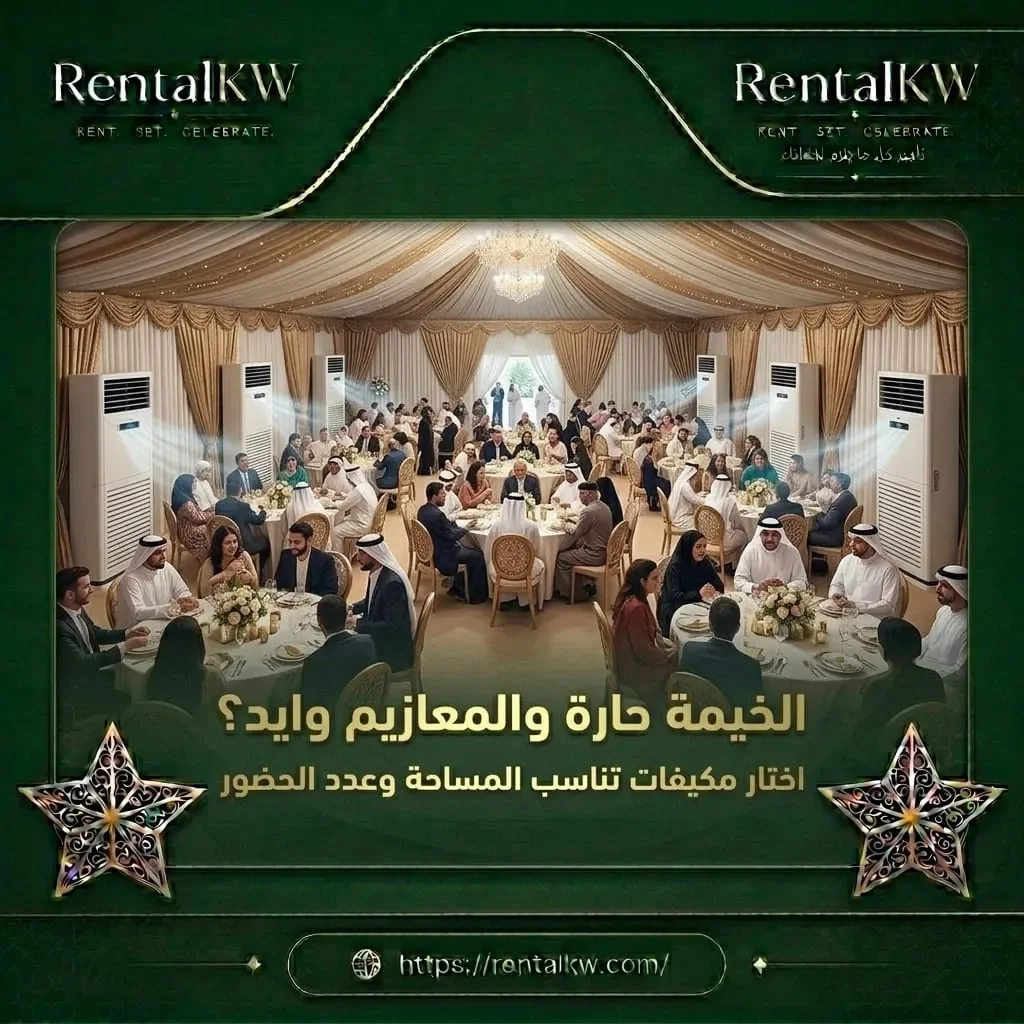
Planning AC units for a 200-guest tent requires more detailed preparation because an increase in guest numbers can mean more than additional heat produced by people. It may also mean a larger tent, more entrances, greater hospitality movement, and additional equipment operating inside the venue.
A seemingly simple mistake is to double the number of AC units used for a 100-guest tent simply because attendance has increased to two hundred. The relationship is not that direct because tent area, height, enclosure, event conditions, and equipment type may all change when the guest count increases.
Large tents can also contain areas with different cooling loads. A zone near an entrance may be more affected by outdoor air than an internal area, while another section may have a higher concentration of guests. Cooling capacity should therefore be distributed according to the different zones rather than considered only as one total number.
A larger event also requires early review of the electrical supply. Increased cooling capacity brings operating requirements that must be compatible with the available power source and connections. These should be assessed by a qualified specialist whenever necessary.
When preparing AC units for a 200-guest tent, it is better to:
• Calculate the peak period when the largest number of guests is expected inside the tent because the cooling system should be planned to handle the most demanding conditions of the event
• Avoid automatically doubling the number of units used in a smaller tent because increased attendance may also involve changes in area, height, entrances, and internal equipment
• Divide a large tent into thermal zones during planning so entrances, crowded areas, and service zones can be considered instead of treating the entire tent as a completely uniform space
• Review unit positions so one area does not receive excessive airflow while a distant section remains less comfortable even though the total cooling capacity appears sufficient
• Have the electrical supply, loads, and required connections evaluated by a qualified person whenever the system capacity makes this necessary before the AC equipment arrives at the venue
• Determine the final number of units only after the capacity of each unit is known because the first objective is to establish suitable total cooling capacity and then identify how many devices are needed to provide it
Suitable AC Capacity for Tents
Determining the suitable AC capacity for tents is more important than simply determining the number of devices. Two rental offers may include exactly the same number of AC units while providing different total cooling capacity, different distribution options, and different equipment types, which can lead to very different results inside the tent.
The required capacity is connected to the heat load created by floor area, internal volume, guests, sunlight, outdoor air infiltration, lighting, and event equipment. Once this load has been estimated, units capable of handling it under the actual operating conditions can be selected.
It is not advisable to choose lower capacity simply because the event lasts for only a few hours. Even during a short event, the tent needs to reach comfortable conditions and maintain them while guests are present.
At the same time, randomly selecting excessive capacity is not always the best solution. What is needed is an appropriately sized system that is distributed correctly and operates within the electrical and site requirements rather than simply increasing the number of units without calculation.
The specifications of the actual equipment should also be reviewed rather than comparing AC units only by brand name or external appearance.
When determining suitable AC capacity for tents, it is better to:
• Calculate the expected heat load first and select capacity according to that result instead of starting with a predetermined number of units and assuming it will suit every situation
• Review the actual rated capacity and specifications of each model because equipment with a similar appearance does not necessarily provide the same cooling performance
• Avoid reducing the required capacity simply because the event lasts for a limited number of hours because the cooling system must still handle the full load while guests are present
• Avoid adding units randomly when the actual problem may be poor airflow distribution, excessive air leakage, or an unsuitable cooling technology for the venue
• Match system operating requirements with the available electrical supply and connections and have them reviewed by a qualified specialist whenever necessary
• Recalculate the required capacity if the tent, guest count, event time, or internal equipment changes because any significant change can alter the heat load used for the original calculation
Number of Evaporative Coolers for a Tent
The number of evaporative coolers for a tent cannot be calculated in exactly the same way as systems based on a refrigeration cycle because evaporative cooling operates differently and its effectiveness depends heavily on weather conditions and the management of incoming and outgoing air.
This type of cooling requires suitable airflow and the objective is generally not to seal the tent in exactly the same way that may be appropriate for some other cooling systems. Humidity also influences evaporative cooling performance, so a fixed result should not be expected under all conditions.
Determining the number of units therefore requires reviewing the capacity of each cooler, the amount of air it can move, site conditions, and the planned airflow distribution according to the specifications of the actual equipment.
It is also necessary to consider where the air will go after entering the tent. Installing large units without planning the airflow path may allow certain areas to benefit while leaving other sections noticeably less affected.
When determining the number of evaporative coolers for a tent, it is better to:
• Evaluate whether evaporative cooling is suitable for the actual weather conditions before calculating the number because its effectiveness is influenced by temperature and humidity and will not be identical every day
• Review the specifications and airflow capacity of each unit instead of treating all evaporative coolers as equal simply because they operate using the same general cooling principle
• Plan the path of incoming and outgoing air in a way that matches the operating characteristics of the system because evaporative cooling requires airflow management rather than simply positioning units around the tent
• Distribute units so they serve the main seating areas instead of directing most of the airflow toward walkways or zones that are not continuously occupied
• Consider the water supply and the operating and maintenance requirements of the actual equipment according to its specifications so the units remain ready throughout the event
• Compare this solution with other cooling options suitable for the venue before choosing it because the correct decision depends on conditions rather than simply whether the number of units is higher or lower
Number of Floor-Standing AC Units for an Event
When determining the number of floor-standing AC units for an event, the first step is to identify the exact type of unit, its capacity, and its installation and operating requirements because the term floor-standing AC describes a general form and does not by itself define performance.
Floor-standing units can be suitable for some event arrangements because they can be distributed across different zones, but their effectiveness depends on the airflow path and whether large obstacles are positioned in front of them. Placing a unit behind a curtain, furniture, or inside a restricted corner can reduce the benefit of the airflow even when the unit has suitable cooling capacity.
Attention should also be given to heat rejection, drainage, connections, or other installation requirements according to the specifications of the specific equipment. Some solutions require supporting arrangements that may not be obvious when looking only at the unit positioned inside the tent.
Floor-standing units should not simply be spaced equally for visual symmetry. An area with a high concentration of guests may require a different approach from a circulation zone.
When determining the number of floor-standing AC units for an event, it is better to:
• Identify the actual capacity and specifications of each floor-standing unit before calculating the quantity because the physical shape of the equipment does not reveal how much cooling it can provide
• Determine unit positions after the furniture layout is complete so sofas, curtains, tables, and other elements do not obstruct the conditioned airflow leaving the AC units
• Direct cooling toward guest areas instead of spacing units equally simply to create an organized visual appearance inside the tent
• Review all installation, operating, drainage, and connection requirements for the selected model before approving it for the event
• Avoid placing several units in one area if airflow cannot reach the rest of the tent because increasing the number of devices does not always compensate for poor positioning
• Calculate the total cooling capacity required by the tent and then convert that requirement into a number of floor-standing units according to the capacity of the selected model instead of beginning with a random device count
Cooling a Tent Based on Guest Count
Cooling a tent based on guest count depends on the heat load created by occupancy rather than a rule assigning one AC unit to a fixed number of people. As the number of people inside the tent increases, the internal heat load rises, but guest count must still be considered together with other factors rather than used alone.
Peak occupancy is the more useful figure. If an event receives changing numbers of visitors throughout the day, the total number of attendees is not necessarily the best value for the cooling calculation. The important figure is the largest number of guests expected to remain inside the tent at the same time.
The seating arrangement also affects cooling distribution. Guests seated at tables throughout the entire tent require a different airflow arrangement from an event where most people are concentrated in only one section.
If the final guest count changes significantly before the event, the cooling calculation should be reviewed. Adding more guests, tables, and chairs to a tent that was originally calculated for a smaller attendance can change both the cooling load and airflow patterns.
When planning tent cooling based on guest count, it is better to:
• Use the expected number of guests during the busiest period instead of the total invitation count so the calculation reflects the heat load the system will actually face
• Identify where guests will gather inside the tent because their distribution affects the areas that need the most effective airflow
• Add the effect of lighting and event equipment to the heat generated by guests rather than treating people as the only internal heat source
• Review the calculation if the final guest count increases significantly because additional guests often also mean additional furniture, movement, and hospitality activity inside the tent
• Avoid converting guest count directly into a number of AC units before knowing equipment capacity because the same attendance can be served by different system configurations depending on the type and capacity of the units
• Evaluate comfort in different seating zones after the system is operating because an average temperature does not guarantee that distant seating areas are receiving adequate airflow
Choosing the Right AC for Tent Size
Choosing the right AC for tent size begins by identifying the problem the cooling system needs to solve. Is the tent exposed to direct sunlight for a significant part of the day? Are the entrances constantly open? Does the site practically support a particular type of cooling system? Answering these questions helps determine the appropriate cooling technology before deciding how many units are required.
The required cooling capacity can then be estimated and available models compared according to their actual specifications. Equipment should not be selected based only on physical size or rental price because a cheaper unit may require a larger quantity or may simply be unsuitable for the site conditions.
Operating requirements also matter. Electrical supply or water availability depending on the system type, equipment placement space, and connection requirements should all be included in the decision.
When comparing prices, the complete cooling solution should be evaluated rather than the rental price of one unit. Total cost can include the number of units, rental duration, delivery, setup, operating requirements, and other agreed services.
When choosing the right AC for tent size, it is better to:
• Identify the tent conditions, degree of enclosure, sun exposure, and entrance activity before selecting the AC type so the cooling system suits actual operating conditions
• Calculate the required cooling capacity and then compare models according to their performance and specifications instead of choosing the cheapest unit or the physically largest device without understanding its capacity
• Review electrical or water availability and the operating requirements associated with the selected system so the cooling solution can actually be implemented at the event site
• Compare the total cost of the cooling solution including units, delivery, setup, and rental duration instead of comparing the price of one device that does not represent the complete cooling cost
• Confirm that the units can be distributed around the tent in a way that allows airflow to reach the main seating areas without interfering with guest or hospitality movement
• Choose a provider capable of discussing tent size, attendance, operating conditions, and equipment capacity before determining the quantity because this approach is more reliable than giving a fixed number of AC units based only on floor area
Conclusion
An accurate answer to how many AC units does your event tent need? does not begin by counting devices. It begins by calculating the heat load. Tent area, height, guest count, sun exposure, airflow, entrances, lighting, and internal equipment can all influence the cooling capacity required.
Once this requirement has been estimated, the appropriate cooling system can be selected. The actual capacity of each unit is then identified and the total required capacity can be converted into a suitable number of devices. This is why it is not accurate to assign a fixed number of AC units to one hundred or two hundred guests without understanding the other event conditions.
Distribution is also just as important as capacity. A properly sized system may still produce poor results if conditioned air does not reach the seating areas. When preparing a large tent or an event with a high cooling load, the electrical and operating requirements should also be reviewed by qualified specialists whenever necessary so the cooling solution is appropriate for the site and can be operated correctly.
Frequently Asked Questions
How many AC units does an event tent need?
There is no fixed number because the calculation depends on tent area, height, guest count, event time, sun exposure, entrances, AC type, and the capacity of each individual unit.
Can AC requirements be calculated from tent area alone?
Tent area can be used as a starting point, but it is not sufficient by itself because internal volume, attendance, sunlight, outdoor air infiltration, and internal heat loads also affect the requirement.
How many AC units are needed for a 100-guest tent?
An accurate number cannot be determined from guest count alone. The tent dimensions, operating conditions, and unit capacities must be known before the required cooling load can be calculated.
Does a 200-guest tent need twice the AC of a 100-guest tent?
Not necessarily. Tent area, height, degree of enclosure, entrances, event time, and equipment type may all differ, so each setup should be calculated independently.
What is the difference between evaporative and refrigerated cooling calculations?
Evaporative cooling depends on the evaporation of water and is strongly affected by weather conditions and airflow, while refrigeration-based systems operate differently. The two systems should therefore not be compared simply by counting the number of units.
Will adding more AC units always fix poor tent cooling?
Not always. The problem may be related to unit capacity, airflow distribution, air leakage, or an unsuitable cooling technology. The cause should be identified before additional equipment is added.
Does guest count really affect tent cooling requirements?
Yes. People add heat to the space, so the expected number of guests during peak occupancy should be included when calculating the cooling load.
What information is needed to choose tent AC equipment?
It is useful to know the tent dimensions, height, guest count, event time, degree of sun exposure, entrance conditions, internal equipment, and available energy source before selecting the appropriate cooling system and capacity.