
Portable AC Rental for Weddings and Events in Kuwait
In this article
- Portable Air Conditioning Rental in Kuwait
- Floor-Standing Air Conditioners for Weddings
- Evaporative Coolers for Events
- Portable Air Conditioning Units for Tents
- Cooling Outdoor Wedding Celebrations
- Portable Air Conditioners for Exhibitions
- Air Conditioning for Corporate Events
- Temporary Air Conditioners for Special Occasions
- Installing Portable Air Conditioning for Parties
- Booking Portable Air Conditioners for Events
- Conclusion
- Frequently Asked Questions
The success of weddings and events in Kuwait depends not only on decorations and organization but also on the temperature inside the venue and how comfortable guests remain throughout the occasion. Cooling becomes particularly important when celebrations take place inside tents, temporary halls, or spaces without permanent air conditioning systems. This is where portable air conditioning rental for weddings and events offers a flexible solution that can be selected according to venue size, attendance, and intended use. However, floor-standing air conditioners differ from evaporative coolers and dedicated tent cooling units in their operating methods, capacities, and installation requirements. This guide explores rental options in Kuwait, how to compare them, and how to choose suitable cooling equipment without unnecessary expenses or preparation mistakes.
Portable Air Conditioning Rental in Kuwait
Portable air conditioning rental in Kuwait has become an option for preparing temporary venues that require cooling for a limited period, including weddings, exhibitions, conferences, and private celebrations. Its value becomes especially clear when installing a permanent air conditioning system is impractical because of the short event duration, the characteristics of the location, or the need to remove all equipment after the event ends.
However, the term portable air conditioning covers different types of equipment and does not necessarily mean that all devices provide the same level of cooling. It may refer to a portable air conditioner that operates using a compressor-based refrigeration cycle and requires hot air exhaust, a larger floor-standing unit, or a temporary cooling system that distributes cooled air through ducts. The actual equipment type must therefore be identified before comparing rental quotations.
The selection process begins with the characteristics of the venue. An indoor hall with tightly closed doors and windows has different cooling requirements from an event tent exposed to sunlight or a space that continuously receives outdoor air. Ceiling height, attendance, lighting, and electrical equipment also influence the heat load that the air conditioning system must handle.
A common mistake is determining the number of air conditioners based only on floor area. A space accommodating a large number of guests may require a different cooling capacity from a similarly sized area occupied by relatively few people. Equipment placement, airflow direction, and insulation can also influence the results, even when the total cooling capacity is similar.
It is therefore preferable to request a technical assessment that estimates the cooling load according to actual operating conditions rather than relying on a fixed formula for every location. Air conditioning capacities are commonly expressed in units such as BTU/h or tons of refrigeration. One refrigeration ton is equivalent to approximately 12,000 British thermal units per hour, but nominal capacity alone is insufficient to determine how equipment will perform at a particular venue.
Portable air conditioner rental prices in Kuwait vary according to equipment type, cooling capacity, number of units, rental duration, and transportation and installation requirements. A quotation may include electrical connections, air ducts, or arrangements for removing water and heat, while another supplier may charge separately for these components.
It is also important to verify equipment condition, filter cleanliness, and connection safety before operation. An air conditioner with suitable cooling capacity may fail to deliver the expected performance if it needs maintenance or if its installation requirements have not been implemented correctly.
The value of a specialized rental service becomes clear when it combines appropriate capacity selection, venue preparation, equipment operation, and testing before guests arrive rather than simply delivering air conditioning units without confirming their suitability for the event.
When searching for portable air conditioning rental in Kuwait, consider the following:
-
Identify the type of cooling equipment included in the rental quotation: Ask whether the units operate using compressor-based refrigeration evaporative cooling or a temporary centralized cooling system because the operating method affects performance and venue requirements and all portable units should not be treated as equivalent
-
Provide venue information before deciding how many air conditioners are required: Explain the size of the space ceiling height expected attendance sunlight exposure and insulation characteristics so cooling requirements can be estimated according to actual operating conditions rather than floor area alone
-
Review cooling capacity using clearly defined measurement units: Make sure the supplier states the equipment capacity in BTU/h or refrigeration tons and identifies the model because describing an air conditioner as large or powerful is not sufficient for a technical comparison
-
Check hot air exhaust and water drainage requirements: Certain portable air conditioners need to discharge heat outside the cooled area and manage condensate water so the feasibility of meeting these requirements should be confirmed before approving equipment placement
-
Compare rental costs with the installation work required: Request a breakdown of equipment rental transportation installation cables air ducts and technical services so quotations can be compared according to total cost instead of the unit rental price alone
-
Inspect equipment condition before the event begins: Review filter cleanliness normal operation the absence of visible leaks or unusual noises and confirm that qualified technicians complete the necessary tests before guests are admitted
Floor-Standing Air Conditioners for Weddings
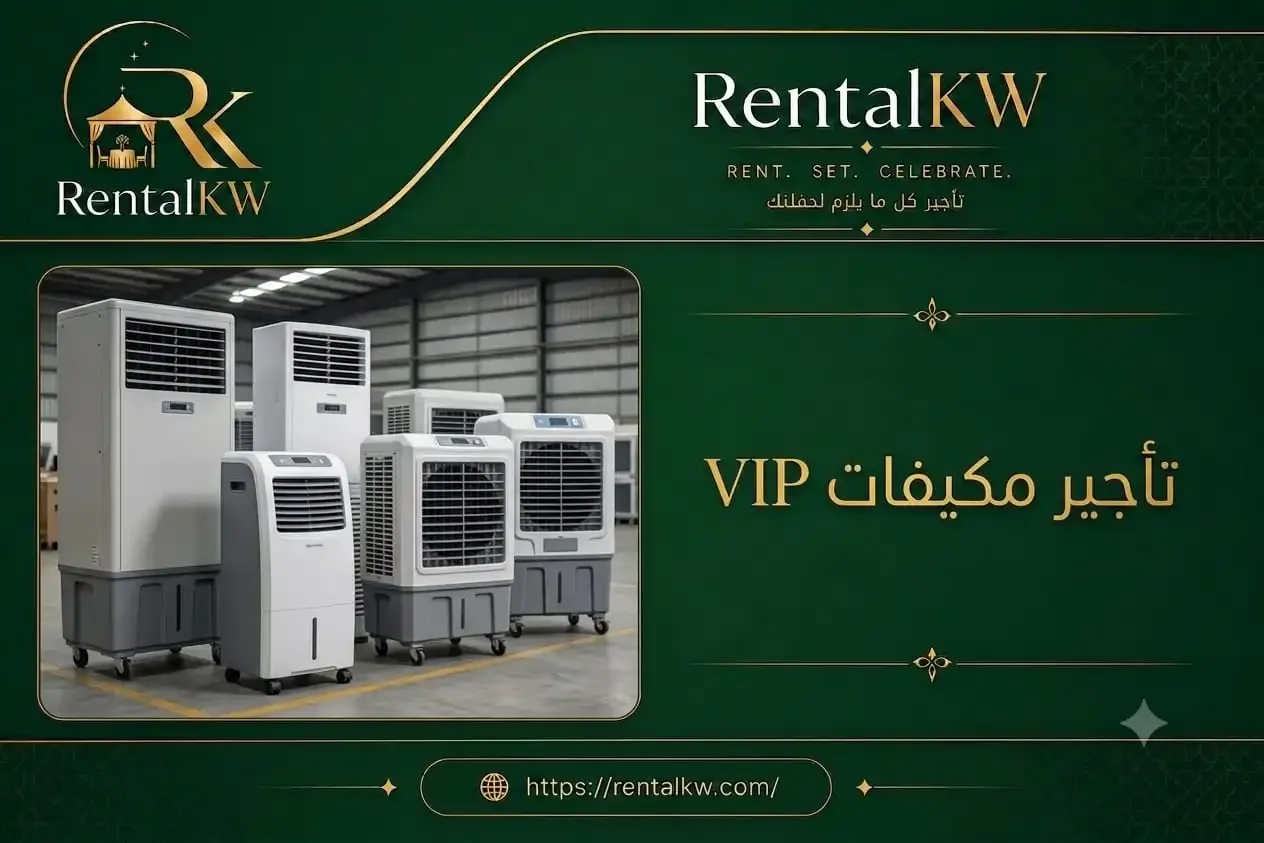
Floor-standing air conditioners for weddings are used in certain halls, Majlis seating areas, and temporary celebration spaces when upright equipment can be positioned within the venue or near guest seating. However, the description floor-standing refers mainly to the unit's physical design rather than defining its cooling capacity or operating method. It is therefore important to distinguish between an actual floor-standing air conditioner that uses a refrigeration cycle and fans or evaporative cooling devices with a similar appearance.
Some floor-standing units can be positioned in selected locations without distributing numerous small devices throughout the venue, but this does not mean they are suitable for every wedding. Certain models require an outdoor unit, refrigerant connections, or hot air exhaust arrangements, while others are self-contained under specified operating conditions. Equipment specifications must be checked before agreeing to transportation and installation.
The shape of the wedding hall influences where floor-standing air conditioners should be placed. In rectangular halls, distributing equipment along more than one side may help achieve better airflow, while spaces containing partitions or columns may need different arrangements to prevent areas from remaining outside the effective cooling range.
Cold air should not be directed continuously toward guests' faces or nearby dining tables. This can make some attendees feel uncomfortably cold while insufficient cooled air reaches other areas. Air outlet direction and adjustment options should therefore be reviewed before equipment positions are finalized.
The appearance of floor-standing air conditioners inside the wedding hall also deserves attention. These units are usually visible and may interfere with photography backgrounds, the wedding stage, or the couple's entrance route. Coordination with the event organizer helps identify locations that do not obstruct movement or conceal important decorative features.
Operating noise is another consideration. Fan and compressor noise levels vary between models and may become noticeable during speeches, photography sessions, or quieter parts of the program. Available noise specifications should therefore be requested, or the equipment should be observed while operating when possible.
Rental costs for floor-standing air conditioners depend on capacity, equipment type, booking duration, and installation requirements. A higher-capacity unit may be more suitable for certain venues, but selecting one without calculating the cooling load can create unnecessary costs or uneven airflow distribution.
The number of floor-standing air conditioners used at previous weddings is not enough to determine current requirements. Differences in attendance, ceiling height, insulation, and venue characteristics can significantly change cooling needs.
When selecting floor-standing air conditioners for weddings, consider the following:
-
Distinguish genuine floor-standing air conditioners from similarly shaped equipment: Confirm that the device uses the required cooling system rather than relying on its external appearance because certain upright units may be fans or evaporative coolers with different temperature reduction capabilities
-
Determine equipment positions according to airflow distribution inside the hall: Review the venue length columns partitions and table locations so cold air does not become concentrated on one side while other sections remain beyond the effective cooling area
-
Avoid directing cold airflow continuously toward guests: Adjust air outlet directions to distribute cooling appropriately without exposing people seated near the units to a constant draft that could affect their comfort during the celebration
-
Coordinate equipment placement with the wedding stage and photography areas: Choose locations that do not conceal important decorations appear prominently in photography backgrounds or interfere with the couple's entrance routes and staff movement
-
Review noise levels while the equipment is operating: Ask about the acoustic characteristics of available models because fan and compressor noise may become noticeable during quiet program segments or formal speeches inside the wedding hall
-
Confirm the connection and installation requirements of each model: Do not assume every floor-standing air conditioner works simply by connecting it to a standard electrical outlet but check whether an outdoor unit special connections or suitable drainage arrangements are required before confirming the booking
Evaporative Coolers for Events
Evaporative coolers for events, often called desert coolers, are offered as temporary cooling options, particularly for open or well-ventilated locations. This equipment operates through evaporative cooling, in which air passes through water-saturated media and loses some of its heat as water evaporates. This process differs from air conditioners that use compressor-based refrigeration and refrigerants, so the two technologies should not be treated as interchangeable alternatives.
The efficiency of an evaporative cooler depends on air temperature and relative humidity. The drier the air, the greater the potential for cooling through evaporation. As humidity increases, performance declines because the air has less capacity to absorb additional water vapor. Results can therefore differ between days even at the same location.
This consideration is particularly important in Kuwait, where temperature and humidity conditions vary according to the season, location, and time of day. An evaporative cooler may be appropriate for certain outdoor events under suitable conditions, but it cannot guarantee a particular indoor temperature in the same way that a properly designed compressor-based air conditioning system may be able to achieve under appropriate operating conditions.
A common mistake is using an evaporative cooler inside a tightly enclosed space without adequate air replacement. This equipment adds moisture to the air and requires suitable airflow and continuous ventilation according to its design. Operating it in an unsuitable environment may increase humidity and discomfort instead of improving conditions.
It is also important to distinguish between airflow volume and cooling performance. A desert cooler may have a powerful fan that moves a large quantity of air, but this does not necessarily mean it will reduce the temperature sufficiently when humidity is high. Performance specifications and recommended operating conditions should therefore be reviewed rather than relying only on airflow strength.
Evaporative coolers also need a suitable water supply, regular monitoring of water levels, and clean tanks and cooling media. Cleaning and maintenance must follow the manufacturer's instructions to prevent unpleasant odors or deterioration in air quality caused by neglected equipment.
In terms of cost, some evaporative coolers may have different electricity consumption and operating requirements from compressor-based air conditioning systems. However, an accurate comparison must include water supply, maintenance, and suitability for climatic conditions rather than focusing only on rental prices.
Choosing an evaporative cooler for an event should therefore follow an assessment of venue characteristics, expected humidity, and the required level of comfort rather than simply selecting a large unit capable of blowing air over a considerable distance.
When evaluating evaporative coolers for events, consider the following:
-
Understand how relative humidity affects evaporative cooling efficiency: This equipment performs better when the air is relatively dry while its ability to lower temperatures decreases as humidity rises so expected weather conditions must be reviewed before choosing it as the event's primary cooling solution
-
Choose locations that allow air replacement according to equipment requirements: Do not operate an evaporative cooler inside a tightly enclosed space without suitable ventilation because the device adds water vapor to the air and requires operating conditions that support continuous air renewal
-
Do not confuse fan strength with the actual temperature reduction achieved: A unit may move a substantial volume of air without providing the expected cooling under humid conditions so performance data should be reviewed instead of judging efficiency by airflow speed or equipment size
-
Confirm that sufficient water will be available throughout the operating period: Review tank capacity or water supply arrangements and refilling requirements so evaporative cooling does not stop during the event because the water level has fallen
-
Inspect tank cleanliness and evaporative media before operation: Request confirmation of the condition of components through which air and water pass because inadequate cleaning and maintenance can cause unpleasant odors and affect air quality and equipment performance
-
Compare evaporative coolers with compressor-based air conditioning according to venue conditions: Choose between the technologies based on humidity ventilation requirements the desired level of cooling and actual operating costs rather than assuming that a lower rental price automatically makes one option more suitable
Portable Air Conditioning Units for Tents
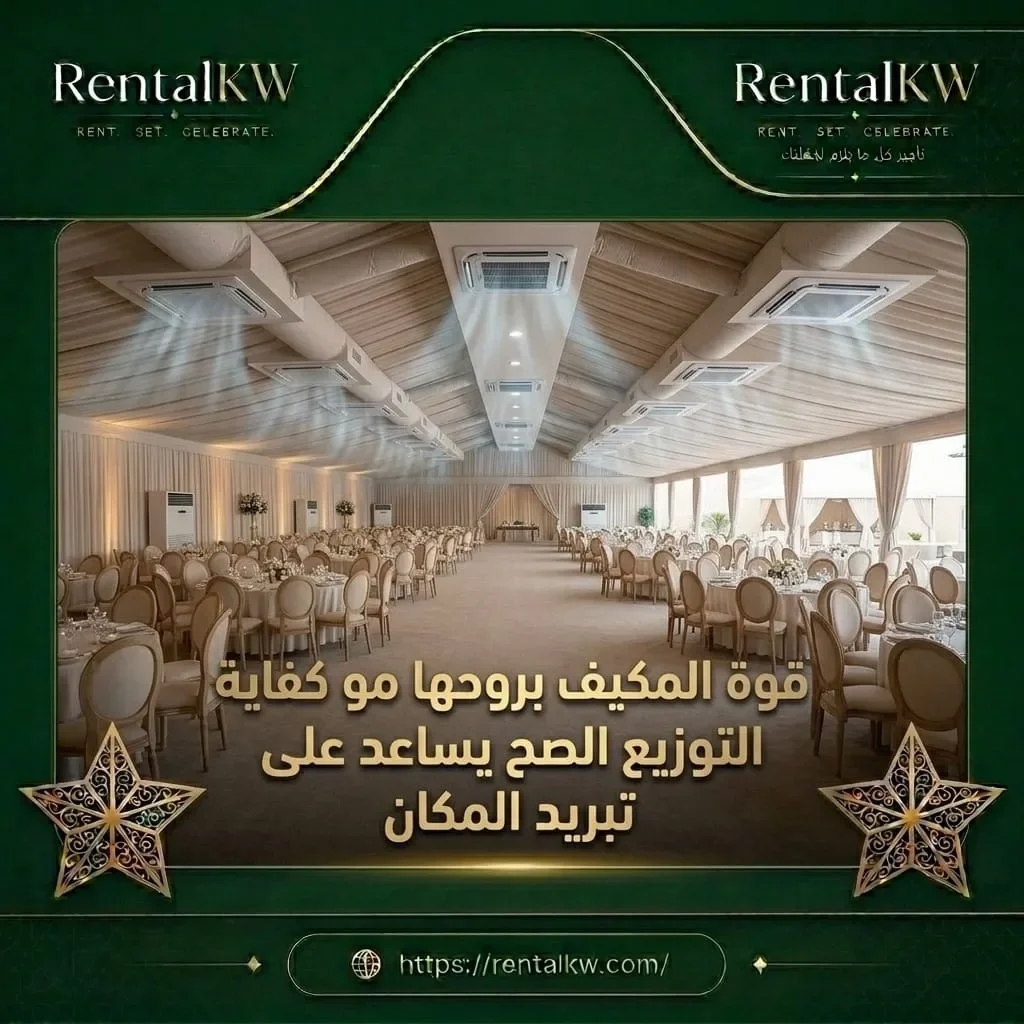
Portable air conditioning units for tents require a different assessment from equipment used in conventional buildings because a tent does not necessarily provide the thermal insulation or airtight construction found in permanent structures. Interior temperatures may rise as the roof and sides absorb sunlight, particularly when the tent uses fabrics or materials that allow substantial heat transfer.
Selecting a cooling system begins with understanding the tent's specifications. Floor area alone does not reveal the volume of air requiring cooling. Ceiling height, fabric type, insulating liners, and entrance arrangements must also be reviewed. The tent's construction and installation method also affect whether air ducts can be connected or air conditioning equipment can be positioned outside.
One possible arrangement involves temporary air conditioning units installed outside the tent, with cooled air delivered indoors through suitable ducts. This configuration may reduce the space occupied by equipment in guest areas, but it requires careful planning of unit locations, airflow routes, power sources, and condensate drainage.
A wedding tent containing numerous tables and powerful lighting has different cooling requirements from a simple reception tent accommodating relatively few guests. People, lighting, and electrical equipment all contribute heat to the space, and these loads must be considered when determining the required capacity.
Entrances that remain open frequently also affect cooling efficiency. If guests and staff continuously move through the tent, warm outdoor air may enter at rates that affect system performance. Some venues may therefore benefit from organized entrance arrangements or suitable measures to reduce air leakage, provided these are compatible with the tent design.
Another possible mistake is directing cooled air toward only a small section of the tent while neglecting more distant areas. This can create noticeable temperature differences between tables, even when the system's total capacity is theoretically sufficient.
The tent installation company must be consulted before routing air ducts, cables, or other equipment through the structure. Fabric and fixing points must not be modified in ways that could compromise tent safety or contradict the instructions of the party responsible for installation.
Financially, the cost of renting air conditioning units for tents varies according to required cooling capacity, number of units, duct lengths, electrical supply, and operating duration. A quotation should therefore cover the complete system rather than comparing the price of the main cooling unit without including air distribution arrangements.
When choosing portable air conditioning units for tents, review the following:
-
Study the tent's characteristics before estimating the cooling load: Establish the tent area ceiling height fabric type and presence of thermal insulation because heat transfer through the roof and sides may increase cooling requirements compared with a permanent building of the same floor area
-
Assess whether air conditioning units can be positioned outside the tent: External equipment connected to air ducts may suit certain tents when the venue design permits it but installation locations connections and airflow routes must be coordinated with qualified specialists
-
Include heat generated by guests lighting and equipment: Do not rely solely on tent dimensions because attendance lighting intensity and electrical devices used during the celebration affect the thermal load the cooling system must handle
-
Review how frequently opened entrances affect cooling performance: Repeated outdoor air infiltration can increase cooling demand so entrance arrangements and methods of reducing air leakage should be considered without compromising ventilation or safety requirements
-
Distribute air outlets across different seating areas: Make sure cooled air reaches distant sections of the tent rather than concentrating near one unit so guests do not experience significantly different temperatures depending on their seating positions
-
Request a quotation that includes air ducts power and condensate drainage: Establish the cost of every component required to operate the temporary cooling system because the main unit may not be usable inside the tent without additional equipment
Cooling Outdoor Wedding Celebrations

Cooling outdoor wedding celebrations presents a different challenge from cooling enclosed halls because cold air disperses quickly in open environments. Maintaining a uniform ambient temperature is generally not possible in the same way as inside a tightly enclosed space. Successful outdoor cooling therefore depends on solutions suited to the environment rather than attempting to use an indoor air conditioning system in exactly the same manner.
Planning begins by identifying the wedding schedule. A celebration starting after sunset may experience less solar heat gain than a daytime event, but temperature, humidity, and wind remain important factors. Not all evening occasions should be assumed to require the same cooling arrangements.
It is also important to establish whether the venue is completely exposed or contains canopies, side walls, or partially enclosed areas. Suitable shading may reduce guests' exposure to direct solar radiation, while walls and barriers can affect airflow and the distribution of cooling.
In completely open locations, solutions that improve localized thermal comfort may be more realistic than attempting to cool the entire surrounding air volume. Depending on conditions, appropriate options may include fans that move air, evaporative coolers when humidity permits, or cooling systems directed toward relatively sheltered areas.
However, moving air and lowering its temperature are not the same thing. A fan may improve perceived comfort under certain conditions without reducing the air temperature itself, while evaporative coolers rely on water evaporation and are affected by humidity. Compressor-based air conditioners require suitable heat rejection arrangements to operate efficiently.
Guest comfort is also influenced by the distribution of tables and chairs. Moving some seating areas into shade or away from exposure to hot air may be more effective than increasing the number of cooling units in an unsuitable location. The wedding layout should therefore be treated as part of the cooling strategy.
A common mistake is placing conventional air conditioning units outdoors without considering the path of their hot exhaust air. If the discharged heat returns to guest areas or equipment air intakes, the expected cooling benefit may decrease.
In terms of cost, cooling a large outdoor wedding may require more complex arrangements than cooling an enclosed hall, but adding more air conditioners is not always the best solution. A proper assessment begins by identifying the areas where thermal comfort is needed and determining whether they can be protected from outdoor conditions before selecting equipment.
When planning cooling for outdoor wedding celebrations, consider the following:
-
Identify celebration hours and the effect of sunlight on the venue: Thermal loads differ between daytime and evening weddings so operating times and solar exposure should be reviewed before choosing suitable cooling arrangements
-
Distinguish completely open spaces from partially enclosed areas: Some seating sections may be beneath canopies or surrounded by barriers while others are fully exposed so each area should be evaluated according to its ability to retain cooled air
-
Use suitable measures to reduce heat gain where practical: Providing appropriate shade or moving seating away from direct solar radiation may improve comfort without depending on additional electrical cooling capacity
-
Choose localized comfort solutions according to climatic conditions: Fans evaporative cooling and systems directed toward sheltered areas may be considered while understanding the differences between moving air and reducing its temperature and how humidity affects each solution
-
Prevent hot exhaust air from returning to seating areas: When compressor-based air conditioning equipment is used heat discharge routes must be arranged appropriately so expelled heat does not accumulate near guests or return to equipment air intakes
-
Avoid attempting to cool an entirely exposed venue without a proper assessment: Focus on areas where guests need thermal comfort because continuous outdoor air replacement may make maintaining a uniform temperature across an open courtyard impractical
Portable Air Conditioners for Exhibitions
Portable air conditioners for exhibitions serve different requirements from wedding cooling because exhibitions usually involve display booths, continuous visitor movement, electronic equipment, and products that may be sensitive to temperature. The objective is therefore not only to keep attendees comfortable but also to maintain conditions appropriate for the activities and displayed materials.
Selection begins by reviewing the exhibition layout and booth distribution. Certain areas may become crowded near entrances or live demonstration platforms, while others contain wide corridors or storage spaces. These differences influence equipment locations and cooling capacities.
The nature of the exhibited products should also be understood. Some electronic devices or heat-sensitive materials may require specific operating or storage conditions established by the manufacturer or event organizer. Air conditioning intended for visitor comfort should not automatically be assumed to satisfy the requirements of every product on display.
Heat generated by lighting, screens, and equipment is another important consideration. A small booth may contain numerous display screens and operating devices, making its cooling requirements greater than those of a larger booth displaying products that generate little heat.
Visitor movement must also be considered. Positioning a portable air conditioning unit at the corner of a corridor may narrow the available space or obstruct booth access, particularly during busy periods. Equipment locations should therefore not interfere with emergency exits or approved circulation routes.
Noise levels are especially important where presentations or meetings take place inside booths. Fan and compressor noise may affect speech clarity, so units with suitable external arrangements or air distribution systems may be more appropriate for certain exhibitions depending on venue conditions.
Exhibitions lasting several days also require a different operating plan from short events. Air conditioning equipment may run for long hours each day, making it necessary to review energy consumption, inspection schedules, filter cleaning, and condensate management.
Financially, rental quotations should be compared according to exhibition duration, operating hours, and required technical services rather than equipment quantities alone. Technical support may be especially important when booths contain equipment that should not be exposed to sudden temperature increases.
When choosing portable air conditioners for exhibitions, consider the following:
-
Analyze booth distribution and visitor circulation routes: Identify crowded areas presentation locations and main walkways so cooling equipment can be positioned without obstructing public movement or access to display platforms
-
Review the requirements of exhibited products and devices: Confirm that the intended temperature is appropriate for the materials on display and do not assume that a level comfortable for visitors necessarily meets the operating or storage requirements of sensitive products
-
Include heat produced by screens and lighting: Certain booths may generate significant thermal loads because of electronic equipment so these loads should be included in the assessment rather than relying on booth floor area alone
-
Consider operating noise in presentation and meeting areas: Choose appropriate equipment types or positions where lectures or customer discussions take place so operating noise does not interfere with communication inside the exhibition
-
Prepare an operating plan for events lasting several days: Review equipment operating hours routine maintenance requirements filter cleaning and water drainage because extended exhibitions require continuity arrangements that differ from those of an event lasting only a few hours
-
Ensure that equipment complies with exhibition requirements: Approved equipment locations electrical requirements and evacuation routes must be respected so temporary air conditioning does not create organizational violations or obstruct visitor movement
Air Conditioning for Corporate Events
Air conditioning for corporate events requires planning suited to the professional nature of the occasion, whether it is a conference, forum, awards ceremony, product launch, or large meeting. These events often follow a specific schedule and include presentations and audiovisual equipment. Inadequate cooling can therefore affect attendee concentration and the smooth running of the program.
Planning begins with the number of participants and their seating arrangement. A conference where attendees sit in closely spaced rows differs from an event featuring meeting tables or open networking areas. Movement between a main hall and additional spaces may also require different cooling arrangements.
The event schedule should be reviewed carefully. A hall may be fully occupied during an opening speech, with attendance declining during workshops or breaks. Understanding these changes helps identify areas requiring continuous cooling and those where thermal loads vary throughout the day.
Many corporate events include display platforms, large screens, sound systems, and lighting equipment. These devices may add heat to the venue, and their locations also affect the space available for air conditioning units and air ducts.
Certain portable units may also generate noise that interferes with audio recording or live meetings. Coordination with the technical team is therefore important when selecting equipment positions and air outlets to minimize interference with microphones and photography areas.
Speakers on stage may also have different cooling requirements from the audience. Concentrated lighting can increase perceived heat around the presentation area, while directing cold air continuously toward speakers may be uncomfortable. Air distribution near the stage should therefore be reviewed carefully.
Regarding reliability, important corporate events may require technical arrangements for handling equipment faults, particularly when the program cannot accommodate lengthy interruptions. This does not necessarily mean renting backup units for every occasion. Instead, the required level of operational continuity should be established according to the event's importance and venue capabilities.
Rental prices depend on equipment quantities, capacities, operating duration, installation requirements, and technical support. A quotation that includes early preparation and clear inspection procedures may be more suitable than a cheaper offer that does not define responsibilities during the event.
When preparing air conditioning for corporate events, it is preferable to:
-
Connect the cooling plan to the event schedule: Review main sessions workshops and breaks because attendee distribution may change throughout the day and affect the thermal loads required in different areas
-
Assess the main hall and additional spaces independently: Cooling requirements may differ between the conference hall registration areas lounges and meeting rooms so one distribution arrangement should not automatically be used for every part of the venue
-
Coordinate with the audiovisual team before installing equipment: Identify unit and duct locations away from microphones cameras and sensitive equipment so operating noise or airflow does not interfere with the program
-
Consider heat generated by presentation platforms and lighting: Review the positions of large screens powerful lighting and stage equipment because their heat output may require different treatment from the audience seating areas
-
Determine the required level of technical continuity: Discuss fault response procedures and appropriate support or replacement options with the supplier when the event includes important sessions that cannot accommodate prolonged cooling interruptions
-
Evaluate quotations according to preparation quality and support rather than price alone: Compare services that include early installation inspection operation and technical assistance so the selected supplier meets the requirements of the professional occasion
Temporary Air Conditioners for Special Occasions
Temporary air conditioners for special occasions provide a solution when cooling is required for a short period or at a venue where installing a permanent system is unnecessary. Applications may include family gatherings, seasonal celebrations, temporary events, and reception areas requiring additional cooling at particular times.
Temporary event cooling differs from purchasing a portable air conditioner for domestic use. Special occasions may require several units operating together under a clear distribution plan, with electrical power, connections, heat exhaust, and water drainage arranged to suit the location.
It is important to establish why temporary air conditioning is needed. The venue may have no cooling system at all, or it may have permanent air conditioning that becomes insufficient when attendance increases. In the second case, the existing system should be assessed before additional equipment is installed because the problem may involve airflow distribution, maintenance, or increased thermal loads rather than nominal capacity alone.
The required operating period should also be identified, whether equipment will run for a few hours or over several days. Duration affects rental costs, maintenance requirements, and monitoring arrangements and may make certain options more suitable than others from an operational perspective.
A common mistake is selecting a small unit because it is easy to transport, only to discover that it cannot handle the venue's cooling load. Conversely, renting an unnecessarily large unit may create unjustified costs or temperature control problems depending on the system type and operating method.
Temporary air conditioners also require appropriate locations that do not occupy circulation routes. A portable unit may have wheels, but that does not mean it can be placed anywhere. Hot air exhaust, electrical supply, and condensate drainage must all be considered.
Regarding prices, rental costs should be compared according to the actual required duration and use. A single-day rental may be calculated differently from a multi-day booking, while transportation, installation, and dismantling charges can affect the overall budget.
The value of temporary solutions becomes clear when the equipment can be removed after the occasion and the venue returned to its usual condition without unnecessary permanent modifications.
When choosing temporary air conditioners for special occasions, consider the following:
-
Identify why additional cooling is required: Determine whether the venue lacks air conditioning or whether its existing system is insufficient because the appropriate solution differs between cooling a space from the beginning and supporting an already operating permanent system
-
Compare rental duration with operating requirements: An occasion lasting a few hours has different needs from an event extending over several days so pricing methods and technical services required throughout the rental period should be reviewed
-
Do not select equipment solely because it is easy to move: A small portable air conditioner may be convenient to transport but unsuitable for the required cooling load so its actual capacity should be confirmed before booking
-
Avoid renting excessive cooling capacity without technical justification: More capacity does not always produce better performance and may lead to additional costs or unsuitable operation in certain systems so requirements should be assessed instead of automatically choosing larger equipment
-
Choose locations that allow proper connections and drainage: Electrical supply hot air exhaust and condensate management must be considered so equipment requirements do not interfere with guest movement or venue safety
-
Confirm that the equipment can be removed easily after the occasion: Discuss dismantling procedures and restoring the venue to its normal condition because one advantage of temporary air conditioning is providing cooling without unnecessary permanent installations
Installing Portable Air Conditioning for Parties

Installing portable air conditioning for parties involves more than positioning equipment and connecting it to electricity. It includes technical procedures that influence cooling performance and operating safety. Incorrect installation of a hot air exhaust duct or poor distribution of electrical loads may reduce system efficiency even when the equipment is new and has suitable capacity.
Installation begins by reviewing the venue layout and confirming that the delivered equipment matches the agreed specifications. Unit dimensions, installation locations, and connection routes should be established before work begins, particularly in temporary halls and tents where circulation space may be limited.
One of the most important requirements is confirming the electrical supply. Certain air conditioning units may need dedicated power connections, separate circuits, or suitable protective equipment. They must not be connected randomly to power strips or extensions that are not rated for the required loads.
Hot air generated by compressor-based air conditioners must also be managed. If a unit requires an external exhaust duct, it should be installed according to manufacturer instructions while preventing hot air from returning to the cooled area or obstructing air intakes.
Condensate water also needs a suitable drainage route. Depending on the equipment type, water may collect in an internal tank or require a drainage hose. It must not be allowed to leak onto floors or near electrical connections.
After installation, equipment should be tested sufficiently early before the event. This includes checking startup, stable operation, connection safety, airflow distribution, and any indications of faults requiring technician intervention.
Cooling performance should not be judged solely by feeling cold air directly in front of an outlet. A unit may discharge cold air while large sections of the venue remain uncomfortable because of poor distribution or excessive thermal loads. Performance should therefore be reviewed across different seating areas.
Responsibility for operating equipment, switching it off, and handling faults must also be agreed upon. Unqualified intervention can cause damage or hazards, particularly when multiple units, electrical connections, or drainage systems are involved.
Installation should preferably take place early enough to allow inspection and corrections before guests arrive rather than being left until the final moments when repositioning equipment or resolving technical problems becomes difficult.
When installing portable air conditioning for parties, review the following steps:
-
Match delivered equipment against the agreed specifications: Confirm the number of units their models capacities and intended installation locations before work begins so significant differences are not discovered after the hall or tent has already been prepared
-
Have the electrical supply inspected by a qualified specialist: Circuits protective breakers and cables must be suitable for the required loads and temporary connections not designed for air conditioning equipment must not be relied upon
-
Install heat exhaust routes correctly: Hot air must be directed outside the area being cooled according to equipment instructions while preventing it from returning to air intakes or accumulating near guests
-
Arrange safe condensate drainage: Review how water is collected or discharged so it does not wet floors obstruct movement or reach electrical connections
-
Test cooling performance across different seating areas: Do not simply confirm that equipment produces cold air but check whether cooling reaches distant areas and whether airflow direction is comfortable for attendees
-
Define responsibility for operation and technical monitoring: Operating instructions must be clear and faults or connection adjustments should be handled by qualified personnel so improvised interventions do not cause the system to stop during the celebration
Booking Portable Air Conditioners for Events
Booking portable air conditioners for events requires more information than the event date and guest count because equipment selection depends on venue characteristics, electrical supply, operating duration, and installation requirements. The clearer the booking information, the easier it becomes to obtain a quotation that matches the actual need.
It is preferable to contact the rental company once the venue and a preliminary event layout have been established. Preparing a large tent may require a technical visit or review of its dimensions, while some smaller locations may allow an initial assessment using detailed information and clear photographs, provided the supplier confirms requirements before installation.
The booking request should include the venue area, ceiling height, expected attendance, activity type, and operating hours. It should also explain whether the location is exposed, enclosed, or already equipped with permanent air conditioning requiring additional support.
A mistake that may affect costs is requesting a particular number of air conditioners without identifying the required capacity. Two companies may offer the same number of units with different cooling capacities, making a comparison between their prices inaccurate. A technical quotation identifying models, capacities, and accompanying services should therefore be requested.
Venue requirements must also be established before confirming the booking. If equipment requires a particular electrical supply, outdoor space for heat exhaust, or air duct routes, failing to provide these arrangements may delay installation or force equipment changes at an inconvenient time.
Delivery and inspection times should also be agreed upon. Air conditioning requires time for operational testing and airflow assessment, so installation should not begin when guests are arriving or only minutes before the event.
Booking modification and cancellation conditions differ between companies. The customer may need to increase equipment quantities or change unit types if the event area or attendance changes. Deadlines and any associated fees should therefore be understood in advance.
From a reliability perspective, it is preferable to choose a quotation that defines technical responsibilities and communication procedures in the event of a malfunction. Suitable equipment alone is insufficient if there is no clear plan for responding to problems that may arise during operation.
All essential details should be documented, including equipment, capacities, rental duration, total cost, transportation, installation, dismantling, and service conditions. This allows booking decisions to be based on clear and verifiable information.
When booking portable air conditioners for events, make sure to:
-
Provide a detailed description of the venue and occasion: Submit the area ceiling height attendance operating hours and activity type so the supplier can assess cooling loads and recommend equipment suited to the operating conditions
-
Request a quotation identifying capacity rather than equipment quantities alone: The agreement should specify air conditioner models and cooling capacities because two units of different types may not deliver equivalent performance even when competing quotations list the same number of devices
-
Confirm that the venue is ready for installation requirements: Review electrical sources equipment locations hot air exhaust routes and condensate management before confirming the booking so technical obstacles do not delay event preparation
-
Agree on a delivery time that allows testing before guests arrive: Arrange for equipment to be delivered and installed sufficiently early to test operation adjust airflow distribution and resolve technical concerns
-
Understand booking modification and cancellation conditions: Ask whether equipment can be added or changed and clarify associated fees and deadlines because event requirements may change after the initial agreement
-
Obtain written confirmation covering services and responsibilities: Review rental charges transportation installation dismantling technical support and fault communication procedures so service details are clear before implementation begins
Conclusion
Portable air conditioning rental for weddings and events in Kuwait is a practical solution for providing cooling at venues requiring temporary arrangements, including wedding tents, event halls, exhibitions, and corporate functions. However, successful service does not depend on renting a large number of air conditioners. It depends on selecting the appropriate technology, estimating cooling loads, and distributing air in a way that suits the venue.
Floor-standing air conditioners, evaporative coolers, and dedicated tent cooling units differ in their operating methods, installation requirements, and ability to handle climatic conditions. Cooling completely exposed outdoor spaces also requires different solutions from those used in enclosed halls, where the indoor environment can be controlled more effectively.
Before booking, venue area, ceiling height, attendance, and heat generated by lighting and equipment should be reviewed. The electrical supply must also be suitable, and arrangements for hot air exhaust and condensate drainage must meet equipment requirements.
When comparing rental quotations, it is preferable to consider actual cooling capacity, equipment types, installation, inspection, and technical monitoring rather than relying on the rental price of an individual unit. A written agreement also helps avoid disagreements concerning equipment quantities, specifications, and delivery times.
The best choice is a service that provides a suitable assessment of venue requirements, equipment in good technical condition, organized installation, and operational testing before guests arrive. These steps can improve thermal comfort during the event while reducing the likelihood of equipment faults and unnecessary expenses.
Frequently Asked Questions
What are the best portable air conditioners for weddings in Kuwait?
The most suitable option depends on venue characteristics, size, insulation, and guest numbers. Floor-standing air conditioners may be appropriate for certain halls, while wedding tents may require temporary units with suitable air distribution. Evaporative coolers are affected by humidity and require appropriate ventilation conditions. The venue should therefore be assessed before selecting equipment.
How many portable air conditioners do I need for a wedding with 100 guests?
An accurate quantity cannot be determined from guest count alone because cooling loads are influenced by venue size, ceiling height, insulation, outdoor temperatures, lighting, and equipment. The cooling capacity of each unit must be established, and an appropriate estimate of the venue's requirements should be completed before choosing the number of devices.
What is the difference between a floor-standing AC and an evaporative cooler?
A floor-standing air conditioner that uses compressor-based refrigeration transfers heat outside the cooled space through a mechanical refrigeration system. An evaporative cooler uses water evaporation to reduce air temperature. Evaporative cooling performance depends on humidity and requires suitable air replacement, so the two technologies should not be treated as identical.
Can portable air conditioning be installed inside wedding tents?
Yes. Temporary air conditioning systems suitable for tents can be used after reviewing the tent design, cooling load, electrical supply, and air distribution routes. Certain systems may require units to be positioned outside the tent, with cooled air delivered indoors through dedicated ducts in coordination with the tent installation company.
Are evaporative coolers suitable for outdoor events in Kuwait?
They may be suitable for certain open or well-ventilated locations when relative humidity is sufficiently low, but their effectiveness decreases as humidity increases. Expected weather conditions and venue characteristics should therefore be reviewed before selecting evaporative coolers as the primary cooling method.
What determines portable air conditioner rental prices?
Prices depend on equipment type, cooling capacity, number of units, rental duration, event location, and transportation and installation requirements. Costs may also include air ducts, electrical connections, condensate drainage, and technical support. A detailed quotation covering all required services is therefore preferable.
Can portable air conditioners cool exhibitions and corporate events?
Yes. They can be used when their cooling capacity is suitable for the venue and operating requirements are met. However, exhibitions and corporate events may contain screens, lighting, and equipment that add thermal loads. Noise levels and circulation routes must also be considered, so cooling arrangements should be designed around the nature of the activity.
When should portable air conditioners be booked before an event?
It is preferable to begin booking after the event venue, dimensions, and date have been established, allowing sufficient time for technical assessment, electrical preparation, and installation arrangements. A delivery time should also be agreed upon that allows the equipment to be operated and airflow distribution tested before guests arrive.